

👋 Managing Tech Millions 📈 your go-to source for building wealth with tech equity and managing the money that comes with it.
Every Thursday, we'll deliver a concise and powerful lesson on building wealth working for equity compensation or on managing your seven and eight-figure portfolio.


Today, in 5 minutes or less, you’ll learn:
💡 Why boring, blue-chip investments outperform flashy, complex deals
🏗️ How to simplify your portfolio with a few trusted operators
📊 The five principles to generate predictable, tax-efficient income from day one

Hey Portfolio CEOs,
A few years back, I stood at a crossroads with my portfolio.
Path One: Do what everyone does. Dump it into index funds and ETFs. Hope the market cooperates. Wait 30 years.
Path Two: Deploy it like the wealthy do. Multiple asset classes. Income-focused. Strategic allocations.
I chose Path Two.
Between 2013 and 2018, I deployed $530,000 across nine specific investments—each one generating actual cash flow, not hypothetical future gains.
The result? $57,000 in annual income. That became the foundation for a portfolio that now generates about $200,000 annually.
So by most standards, it was a success.
But here’s the thing: It worked, but I made it way harder than it needed to be.
Since that first deployment, I’ve put millions more to work. I’ve refined the approach. I’ve learned from some expensive lessons. And I’ve watched what works consistently versus what just worked once.
If I were standing at that same crossroads today—same $500,000, same goal of generating income—I’d make very different decisions.
Because here’s the big shift in my thinking that changes everything:
In wealth-building, boring and simple beats innovative and complex every single time.
Let me show you exactly what I mean.

Managing Tech Millions is a Weekly Podcast that gives you deep dive conversations into building and growing wealth with myself and other industry experts.
This week, I’m debunking the biggest myths in investing—and showing you why “trust your gut” and “do more research” are the wrong moves at this level.
The Instinct Trap: Why relying on your gut leads to emotional, costly decisions
Endless Research ≠ Better Results: How high achievers get stuck chasing more data instead of outcomes
The Family Office Playbook: How the ultra-wealthy make clear, confident investment calls
Legacy + Thesis: The two documents that changed how I evaluate every opportunity
Think Like a Pro: Because your portfolio deserves better than guesswork and anxiety

What I Did Then: The Original Deployment
My first move in 2013 was putting $123,000 into a private equity real estate fund. Multiple property types, experienced operators, zero management on my end.
It generated $8,470 per year—a 6.89% cash-on-cash return.
Then in 2017, I invested $200,000 across two multifamily syndications. Value-add deals that sounded sophisticated and exciting.
Combined returns?
$12,664 per year. That’s a blended 6.33% cash-on-cash.
Also in 2017, I made what turned out to be my highest-returning investments: five single-family rental properties.
Total investment of $208,000, generating $36,291 per year. Cash-on-cash returns ranging from 12% all the way up to 26%.
Here’s the summary:
$530,000 total deployed
$57,428 in annual income
11% blended cash-on-cash return
Nine different investments
Now, what actually worked about this approach?
I was generating real income from day one. Not waiting 30 years for some hypothetical retirement drawdown. I had diversification across nine different investments.
There was a balance between passive (61%) and active (39%) management. And I could still work full-time.
This deployment proved that building income-focused portfolios actually works.
But here’s what I learned the hard way:
Nine different investments meant a lot of due diligence and monitoring. Multiple operators meant shallow relationships and standard terms. The high returns on single-family rentals came with tenants, toilets, and endless text messages. And complexity? That was everywhere.
The mental overhead was exhausting.
So here’s what I’d do completely differently today with that same $500,000.

The Refined Approach: 5 Principles That Changed Everything
Principle 1: Prioritize Income Over Total Returns
Back then, I was seduced by IRR projections. 18% projected returns! 20% if things go well! But here’s the problem: those returns were mostly theoretical. They assumed perfect exits at perfect times with perfect market conditions.
Today, I’d focus on one metric: cash-on-cash return from day one.
I want to see money hitting my account quarterly. Not promises of future gains. Not equity appreciation I can’t access. Actual cash flow I can use, reinvest, or live on.
This single shift changes which investments you even consider. Instead of chasing the sexiest syndication with the highest projected IRR, you’re looking for boring, predictable income generators.
Principle 2: Invest in Boring, Blue-Chip Assets
The original portfolio had “exciting” investments. Value-add multifamily. Emerging markets. Properties that needed repositioning.
Every single one required the stars to align: skilled operators, perfect execution, favorable market conditions, clean exits.
What I’d do now? Industrial real estate. Self-storage. Established operators with 20+ year track records.
These are the investments nobody brags about at dinner parties. But they’re the ones generating predictable returns year after year, regardless of market conditions.
Here’s what makes blue-chip assets different: They’ve survived multiple recessions. The operators have seen every market cycle. The business models are proven. The returns are modest but consistent.
Translation: They just work.
Principle 3: Build Relationships, Not Transactions
The original deployment spread across multiple operators meant shallow connections everywhere. Standard terms. No preferential treatment. Zero inside track on the best deals.
Today’s approach? Find one or two exceptional operators, then invest with them across multiple offerings.
When you go deep with one operator instead of spreading wide, several powerful things happen:
You get better terms and preferred investor status. They know you. They trust you. They want to keep you happy.
You get early access to deals before they’re broadly marketed. With great operators, funds often fill up before any external marketing happens.
You develop real relationships. You understand how they think. You get insider knowledge about what’s working.
Your due diligence becomes concentrated. You know this operator inside and out.
One warning though: These experienced operators won’t be running ads. Their deals fill up without them. You’ll need to know someone who knows someone.
This is why surrounding yourself with people actively allocating money into these investments matters so much.
It’s one of those situations where “it’s not what you know, it’s who you know” actually applies.
Principle 4: Go Deep, Not Wide
Original approach: Nine different investments. Multiple operators. Constant mental overhead.
Refined approach: Four to six core investments with one to two exceptional operators.
Let me give you a concrete example: Instead of doing one deal with a great industrial real estate operator, I’d look into their other funds. Maybe they have an income fund. Maybe they have a debt fund. I’d consider deploying capital across multiple vehicles with the same blue-chip operator.
This concentrated approach doesn’t just reduce complexity—it compounds relationships.
Principle 5: Diversify Income Strategies Early
Despite being diversified across different real estate sectors in that original portfolio, it was still all in the same asset class. Single asset class concentration risk.
More importantly, it was a missed opportunity for income diversification.
Today, I’d allocate approximately 80% to real estate and 20% to alternative income strategies from day one.
That 20% would include:
Covered calls on index ETFs and cash-secured puts (8-12% annually with relatively low risk)
Private credit for predictable interest income
Bonds for stability and diversification
The reason is simple: Multiple income streams provide resilience. If one strategy hits a rough patch, the others keep generating income. Your total cashflow is more stable.
Plus, each strategy has different tax characteristics. Options can be tax-efficient. Private credit generates ordinary income. Real estate has depreciation benefits.
This creates a more robust, tax-optimized income machine overall.
The Numbers: Old Way vs New Way
Original Approach:
Deployed: $530,000
Annual Income: $57,000 (11% cash-on-cash)
Investments: Nine different ones
Complexity: Medium to high
Time Investment: Significant
Refined Approach (same $500,000):
Target Returns: 12-15% cash-on-cash
Investments: 4-6 core investments
Operators: 3-4 exceptional relationships
Time Required: Significantly less
Scalability: Much easier (simpler systems)
This refined approach is exactly how I went from that initial $57,000 of annual cash flow to $200,000 while spending maybe 5-10 hours max per week on strategic decisions.
The boring machine just runs.
What This Means for You
Here’s what I want you to take away from this:
Your first $500,000 deployment (or $100,000, or $1,000,000) doesn’t need to be perfect. But it should be simple.
Complexity doesn’t equal sophistication. In fact, the most sophisticated investors I know have the simplest portfolios. They’ve learned that boring and predictable beats exciting and unpredictable every single time.
If you’re sitting on deployable capital right now—whether it’s from RSU vesting, an exit, or years of disciplined saving—resist the urge to spread it across a dozen different “opportunities.”
Instead:
Focus on cash-on-cash returns from day one - Not projected IRRs or theoretical gains
Find boring, blue-chip operators - Look for 20+ year track records, not sexy new ventures
Build one deep relationship - Better to know one operator inside and out than five superficially
Keep it simple - Four great investments beat nine mediocre ones
Diversify income strategies early - Don’t wait to add non-real estate income streams
The goal isn’t to build an impressive-sounding portfolio. The goal is to build a boring machine that generates predictable, tax-efficient, passive income with minimal operational overhead.
And here’s what most people don’t realize: This boring approach will outperform 90% of “exciting” investments over time.
Why? Because it’s sustainable. It’s scalable. It doesn’t require you to be a genius or have perfect market timing.
It just works. Month after month. Quarter after quarter. Year after year.
One question for you: What’s your biggest challenge right now in deploying capital? Are you stuck in analysis paralysis? Overwhelmed by options? Not sure where to start?
Hit reply and let me know. I read every response.
Be Intentional / Christopher
P.S. The biggest mistake I see tech professionals make isn’t choosing the wrong investments—it’s overcomplicating the process. Remember: Boring wins.

Join me for The WealthOps Way—our free live masterclass designed to help you stop guessing and start running your wealth like a business.
You’ll go from scattered to strategic as you craft your own Portfolio Thesis—the foundation of everything that follows.
👉 In just two sessions, you’ll:
Clarify your long-term vision
Define your next best investment move
Build the system that turns wealth into freedom
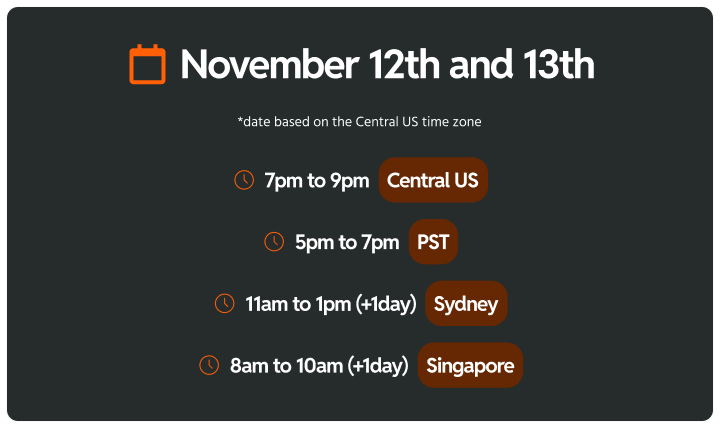
Spots are limited—and the clarity you’ll gain? Game-changing.
Let’s build your portfolio like it’s your next great company!

If you like the newsletter, support us by letting us know what you think (one click); please do that now!
PS...If you're enjoying Managing Tech Millions, please consider referring this edition to a friend.
And whenever you are ready, there three ways I can help you:
Follow me on LinkedIn: Get more insights and real-time updates.
Tune into the Podcast: Dive deeper into wealth strategies and interviews.
Get in Touch: Ready for a bigger move? Let’s talk.

Disclaimer: This newsletter is for informational purposes only and does not constitute financial or career advice. Always consult with qualified professionals before making any decisions based on the information provided.