


👋 Managing Tech Millions by WealthOps 📈 your go-to source for building wealth with tech equity and managing the money that comes with it.
Every week, we'll deliver a concise and powerful lesson on building wealth working for equity compensation or on managing your seven and eight-figure portfolio.


Today, in 5 minutes or less, you’ll learn:
📊 The 8,030 vs. millions math that forces this role into existence
🎯 Why the role doesn’t have an institutional name yet (and what historically happens next)
🗺️ What you do right now if you suspect you’re already inside this role

Hey Family Office CEOs,
Last week I told you the personal half of a story I think is going to define the next decade for a generation of wealth builders. The transition from money maker to money manager. The second career.
Here’s the structural half. And I’ll lead with the call:
By 2030, “Family Office CEO” will be a recognized professional role — with its own training tracks, peer associations, and credentialing pathways. The role exists today only as something a small number of practitioners have built for themselves. Five years from now it will have institutional standing similar to what “Fractional CFO” has today. That’s the bet I’m willing to put my name on.
This is the second on-the-record prediction in the monthly series. The first one (the Family Office Era is Just Starting) was about the structural conditions making the role possible. This one is about the role itself getting named.
The reason I’m willing to stake my name on it is that the math is already done. The role exists in everything but title. It just hasn’t been recognized yet.

Managing Tech Millions is a Weekly Podcast that gives you deep dive conversations into building and growing wealth with myself and other industry experts.
This week, I’m breaking down the seven components that run every family office—and why being worth one to thirty million leaves you stuck in a gap nobody built for.
The Service Desert: Too big for a retail app, too small for a single family office—here’s where the Micro Family Office fits.
Vision Comes First: Your Legacy Statement and Investment Thesis are the filter every dollar has to pass before anything else gets built.
The Two-Company Architecture: Own nothing in your personal name, control everything through the structure—the same setup the ultra-wealthy use, scaled to you.
From Reactive to Run: Process and Data turn scattered accounts and one-off decisions into a business that operates on a rhythm.
Governance Is the One Everyone Skips: It’s the difference between managing your own money well and building wealth that actually outlasts you.
Score Yourself: A simple version of all seven beats a sophisticated version of three—take the free Readiness Scorecard to see exactly where your gaps are.

The Math That Forces the Role
There are only 8,030 Single Family Offices in the world as of 2024 (Deloitte). That’s the entire population of households wealthy enough to justify the traditional family-office structure — which costs $1–$2 million per year to operate, with some running over $8.7 million annually (Campden Wealth 2024). The economics only work above roughly $100M in investable assets. Increasingly the threshold is $250M.
8,030 families. Globally. That’s the universe the traditional Single Family Office serves.
Now look at the tier directly below them.
According to the Federal Reserve, Cerulli, and Spectrum Group, there are roughly 2.5 to 3.2 million U.S. households in the $3M–$50M net worth range. They control somewhere between $25 and $35 trillion in aggregate wealth. Worldwide the count is multiples of that.
That’s not a rounding error. It’s a population three orders of magnitude larger than the families currently served by formal family-office infrastructure — holding a comparable share of total private wealth.
And here’s the part that matters: these households have family-office-level complexity without family-office-level infrastructure. Multi-entity holdings. Real-estate portfolios. Concentrated business positions. Trusts. Estate planning. Alternative investments. Tax strategy. Generational transfer concerns. Every one of them is running an operation that requires the same disciplines a $500M family office runs — at a fraction of the scale.
What the market research report I’ve been studying makes brutally clear: roughly a quarter of these households have no professional financial advisor at all (Spectrum Group). Not because they don’t want one. Because the existing options are either misaligned, overpriced, or unavailable at this scale.
That gap doesn’t stay vacant. It gets filled.
The Pattern History Keeps Repeating
Every time a population of professionals reaches critical mass running similar operations, the same sequence plays out:
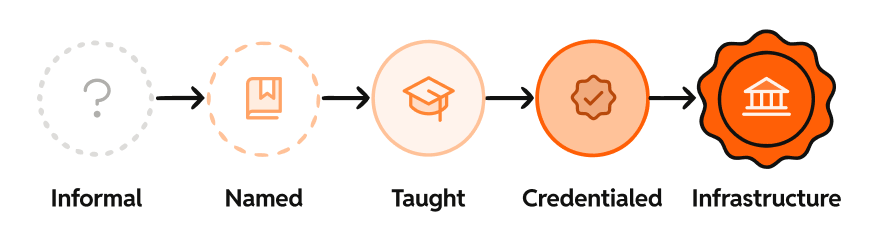
The role exists informally. A handful of practitioners are doing the work, building it from first principles, talking to each other privately.
The role gets named. Someone — usually a practitioner, sometimes a journalist, sometimes a training company — gives it a label that sticks.
The role gets taught. Curricula form. Books get written. Conferences appear.
The role gets credentialed. Trade associations form. Certifications emerge. The role moves from informal to institutional.
The role becomes infrastructure. Within a decade, it’s part of the standard cast of professionals every wealth-management conversation includes.
That’s how “Fractional CFO” became a standard role. That’s how “Chief of Staff” became one. That’s how “Family Office Executive” became one (the trained employee — Wharton, Pepperdine, and others run those programs already).
The role I’m calling out is upstream of that. It’s not the trained employee who works inside a family office. It’s the wealth holder who runs one.
That role has no institutional name. There’s no degree program for it. There’s no peer association for it the way TIGER 21 exists for the $20M+ NW tier or CCFOO exists for the family-office staff. There’s a multi-trillion-dollar role with no name and no formal training path — and a population of millions stepping into it.
Markets don’t tolerate that gap for long. Names get attached. Training paths get built. The role gets recognized.
Why This Role, Right Now
Three forces are converging — each one independent, each one already in motion:
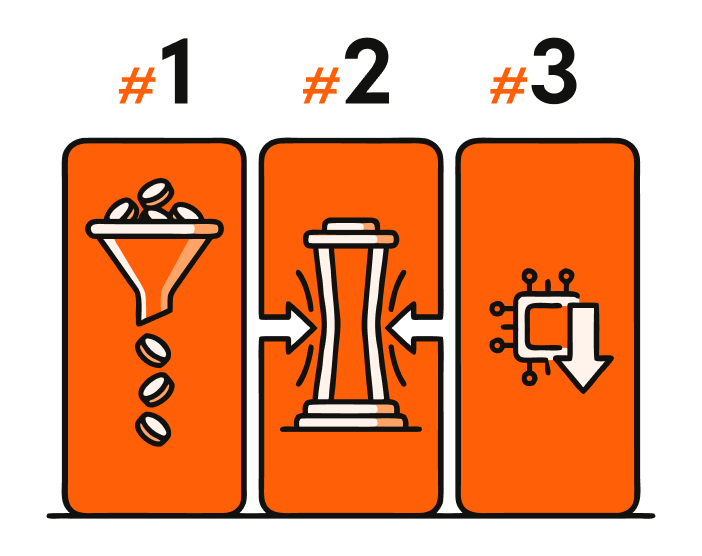
1. The wealth wave is the largest in history. First-generation tech equity, business sales, and the Boomer wealth transfer are all stacking in the same decade. Cerulli alone projects $84 trillion-plus moving to heirs and charity by 2045. That’s the funnel. It’s pouring people into the $3M–$50M tier faster than any prior decade in American history.
2. The traditional structure can’t scale down. A $1M-a-year operating cost can’t be amortized across a $10M portfolio. The math doesn’t allow it. So either the structure stays out of reach for this entire tier — or it gets fundamentally redesigned to scale down.
3. AI just collapsed the cost of running one. The administrative throughput that used to require a 4–7 person staff is now done by AI-assisted systems orchestrated by a single operator. What used to cost $500K a year in staff costs $20–50K a year in tooling plus a small specialist team. The cost curve broke. The structure that used to need $100M+ in AUM to justify can now run on a $5M+ portfolio.
When the cost of running an institution drops by 90%, the population that can run one grows by orders of magnitude. That growth requires a role. The role requires a name.
What I’m Naming It
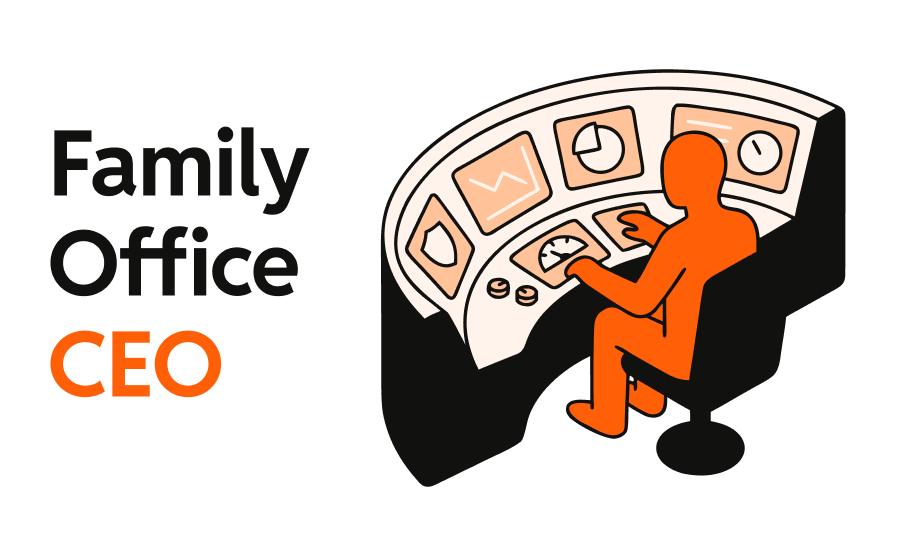
The role is Family Office CEO.
That’s the title for the wealth holder who:
Runs their wealth as an institution, not a portfolio
Sets the strategy and owns the decisions
Coordinates a team of specialists (CPA, attorney, bookkeeper, advisors)
Builds the operational cadence and governance
Trains successors to run and scale it after them
Operates with the discipline a CFO would bring to a real company
That’s the work. It’s been done informally for decades by wealth holders who figured it out the hard way. It’s about to get done systematically by a generation of people learning it on purpose.
When the institutions catch up and name it formally, it’s not going to be a new invention. It’s going to be the recognition of what practitioners are already doing — at a scale and with a coherence that the institutions haven’t had a name for yet.
I’m planting the flag early because the role is already operating. The naming is a lagging indicator. The work itself is the leading one.
The Counter-Arguments
“There’s no demand for another credential.” The demand is already there — it’s just unmet. People are searching for “how to run a family office” without finding training paths designed for the wealth holder rather than the staff. The demand doesn’t show up as “I want a credential.” It shows up as a million informal searches for a role that doesn’t have a category name.
“Family offices are too custom for standard training.” True for Single Family Offices at the $500M+ tier. Not true at the $3M–$50M tier where the structures are converging toward common patterns. That’s exactly why the role becomes nameable now — because at scale, the patterns are similar enough to support standard training.
“Most people in this tier just want to outsource.” Some will. The ones who don’t are going to dramatically out-perform — not because they’re smarter, but because their decisions are aligned with their actual goals. As the gap becomes visible, more people cross over. The early adopters become the role models who make the next wave possible.
What This Means For You
If you suspect you’ve already started doing this work informally — coordinating professionals, running the cadence, owning the strategic decisions — you’re already in the role. The naming is the lagging step. The work is the leading one.
If you’re sitting at $5M+ and quietly wondering what you’d even call yourself professionally now — the answer is coming. It’s already being built. It’s coming from practitioners who are doing the work and naming it for themselves while the institutions catch up.
If you’re earlier in the wealth-building arc and watching this from a distance — start by recognizing this is a real career, not a hobby. The transition I described last week is real. The role it creates is what we just named.
The 8,030 family offices that have always existed are not going away. They’ll keep doing what they’ve always done at the scale they’ve always done it.
What’s coming is a layer below them — millions of households running the same disciplines at a fraction of the cost, led by a generation of operators who are about to have a name for what they do.
I’m going to keep building toward that role. I’m going to keep teaching it. In five years it’ll be obvious to everyone. Right now it just looks obvious to the people doing the work.
Let’s keep building.
—Christopher
P.S. If “Family Office CEO” describes what you’ve quietly been doing — or what you’ve been trying to figure out how to start doing — that’s the entire reason WealthOps exists. We’re building the curriculum, the cadence, and the peer practice for the role while the rest of the industry is still figuring out what to call it.
👉 Start here: The WealthOps Way — a free 2-hour live workshop where I walk through the foundation from the beginning.
Go Deeper
Last week’s issue: The Second Career I See Coming — the personal half of this two-issue arc: the CIO Arc, the transition from money maker to money manager, and the three principles that make the transition work.
New here?
I’m Christopher. I built my Family Office after my 2012 IPO, spent over a decade studying how it actually works, and walked away from the workforce in 2022. Now I teach the framework at WealthOps. If this is your first issue — welcome. The best place to start is The WealthOps Way (wealthops.io/go). Free workshop, full framework, no pitch.
This is education, not advice. Learn the systems, don’t copy blindly.

Join me for The WealthOps Way—our free live workshop designed to help you stop guessing and start running your wealth like a business.
You’ll go from scattered to strategic as you craft your own Portfolio Thesis—the foundation of everything that follows.
Spots are limited—and the clarity you’ll gain? Game-changing.
Let’s build your portfolio like it’s your next great company!

If you like the newsletter, support us by letting us know what you think (one click); please do that now!
PS...If you're enjoying Managing Tech Millions, please consider referring this edition to a friend.
If this was useful, tap the ❤️ button. It tells Substack to show more writing like this.
And whenever you are ready, there three ways I can help you:
Follow me on LinkedIn: Get more insights and real-time updates.
Watch on YouTube: Dive deeper into wealth strategies and interviews.
Get in Touch: Ready for a bigger move? Let’s talk.

Disclaimer: This newsletter is for informational purposes only and does not constitute financial or career advice. Always consult with qualified professionals before making any decisions based on the information provided.