

👋 Managing Tech Millions 📈 your go-to source for building wealth with tech equity and managing the money that comes with it.
Every Thursday, we'll deliver a concise and powerful lesson on building wealth working for equity compensation or on managing your seven and eight-figure portfolio.


Today, in 5 minutes or less, you’ll learn:
📊 Why the $1M–$30M wealth range has always been underserved — and what’s different in 2026
🎯 What a Micro Family Office actually is (and what it’s not)
🗺️ The 7 components that make it work — and why structure matters more than strategy

Hey Portfolio CEOs,
In 2012, I had a tech IPO that generated $3–4M. I’d been managing my own stock investments for a decade — I wasn’t looking to hand control to anyone.
But at that level of wealth, I took a meeting with Morgan Stanley. Post-IPO. Multiple 7 figures. 90% concentrated in a single stock. I came in with real questions: concentration risk, entity structure, tax coordination.
They slid a 60/40 portfolio proposal across the table and couldn’t answer a single one.
I walked out knowing I was completely on my own. Then I Googled “how to build a family office.”
The answer? $100M minimum to get started.

Managing Tech Millions is a Weekly Podcast that gives you deep dive conversations into building and growing wealth with myself and other industry experts.
This week, I’m showing you how to stop handing your wealth over to advisors—and start managing it like a business with the Micro Family Office framework.
The Financial Services Desert: Why investors with $1M–$30M are underserved by traditional advisors
The Traditional Model Fails: How the industry is structured to leave high earners behind
The Four Phases: Architect, Build, Run, and Succession—how to build your own wealth-operating system
Asset Protection and Tax Optimization: How the Two-Company Architecture can unlock both
Fractional Specialists Over Full Teams: Why you don’t need a multi-million dollar team to run your wealth
Operate Like a Business: How treating your portfolio like a CEO leads to better long-term outcomes

The $100M Wall
When I hit that $100M minimum, I didn’t stop researching. I kept reading. Kept talking to wealth managers. Tried to reverse-engineer what the ultra-wealthy were actually doing.
Here’s what I found: traditional family offices require $100M or more just to justify the overhead. Full-time staff. Dedicated investment teams. Chief Investment Officers. Seven-figure annual costs.
For everyone else — everyone in the $1M to $30M range — the message from the industry is: go back to your advisor.
That advisor? Giving the same 60/40 portfolio to every client who walks in the door.
The complexity of your wealth doesn’t fit in a standard brokerage account. Concentrated positions, equity compensation, entity structures, early-stage investments, tax optimization — none of this gets addressed with generic advice.
There’s a name for this gap.
The Service Desert
The service desert is the gap between $1M and $30M where the wealth management industry has always underserved people.
Too complex for retail financial services. Too small for traditional family offices. The industry wasn’t built for you — so you’ve been navigating without the right infrastructure.
“You’re in a service desert. Too complex for retail financial services, too small for traditional family offices. The industry isn’t built to serve you — so you have to build your own infrastructure.”
(I wrote about this in depth here if you want the full picture.)
This isn’t a personal failure. It’s a structural gap. Below $1M, there are plenty of resources — index funds, robo-advisors, personal finance content. Above $100M, Single Family Offices provide everything. Between $1M and $30M? A desert.
The wealth management industry is evolving. 68% of all family offices globally were established after 2000. But the evolution hasn’t reached this wealth level — not in a systematic, accessible way.
That’s why we built the answer.
What Is a Micro Family Office?
A Micro Family Office (MiFO) is not a product. It’s not a service you hire. It’s not a fund.
It’s a structure you build.
Specifically: it’s a lean wealth management business designed for $1M–$30M portfolios, built on the same principles that run a $500M Single Family Office — with scaled execution appropriate for your size.
The key word is business.
Traditional wealth management treats your portfolio as a collection of accounts. A MiFO treats it as a business — with vision, structure, governance, and operational systems built around it.
In 2012, a friend who had spent his career running family offices sat down with me and changed how I saw everything.
“Christopher, it’s not about size. Every family office — $10M or $10B — has the same seven components. The only difference is scale.”
That conversation gave me the map I’d been searching for. Not the infrastructure overnight — the map. I finally knew what I was building. I knew what was missing. I knew the sequence.
The 7 Components
Every functioning MiFO runs on 7 integrated components. These are the same components that power a Single Family Office — scaled for the $1M–$30M range.
Foundation:
Vision — Your legacy statement, investment thesis, and the “why” behind your wealth
Structure — Your portfolio architecture: how assets are organized across entities and accounts
Operations:
Protection — Legal and tax frameworks that shield your wealth from unnecessary risk and taxation
Process — Standard operating procedures that create consistency across every decision
Data — Tracking systems that measure what actually matters (not just account balances)
Leverage:
Advisory Partners — A coordinated team of fractional specialists who execute within your strategy
Governance — Decision-making frameworks and the rhythms that keep the whole system running
These aren’t random categories. They’re the universal architecture that every successful family office — from the Rockefellers to modern tech founders — has used for generations.
In 1882, John D. Rockefeller established a family office to manage wealth, investments, philanthropy, and legacy. Nearly 150 years later, that office still operates. The Vanderbilts? No coordinated structure. Within 50 years of Cornelius’s death, the fortune had largely dissipated.
The difference wasn’t the size of the fortune. It was the infrastructure around it.
A MiFO creates that infrastructure — at a scale appropriate for $1M–$30M.
What’s Different in 2026
Here’s what’s changed since I first hit that $100M wall:
Technology has closed the staffing gap. What once required a full-time team of analysts and administrators can now be handled with the right software, systems, and fractional experts.
The fractional expert market has matured. Certified Tax Planners, specialized CPAs, and estate attorneys who serve the $1M–$30M segment are more accessible than they’ve ever been.
And the framework for building a MiFO — the 7 components, the maturity model, the sequenced build — now exists as an education system anyone at this wealth level can access.
What hasn’t changed: the fundamental principles are the same.
A $10M MiFO has fractional specialists reviewing quarterly. A $500M Single Family Office has full-time staff reviewing daily. Same components. Different execution scale.
“Same principles. Scaled execution.”
If you have $1M to $30M in investable assets and you’re navigating without a structure — making decisions as they come up, relying on advisors who don’t coordinate, tracking balances instead of performance — you’re working harder than you need to.
The infrastructure exists. The only question is whether you build it.
Key Takeaways
The service desert is real — $1M–$30M is the gap the wealth management industry hasn’t solved. A MiFO is the answer.
A MiFO is a business, not a product — You build it. You run it. You’re the CEO.
The 7 components are the architecture — Every successful family office runs on the same framework. The scale changes. The structure doesn’t.
Your Action This Week
Read the full breakdown: What Is a Micro Family Office in 2026?
Then ask yourself one honest question: of the 7 components, how many do you actually have in place?
Not started. Not thinking about. Operational.
Most people I work with come in at 1–3. That’s not a verdict on your capability. The framework was never taught at your wealth level.
Now it is.
Let’s keep building.
—Christopher
P.S. The blog post breaks down each of the 7 components in detail — what they are, what they do, and how they work together at the $1M–$30M level. If the term “Micro Family Office” is new to you, start there. It’ll reframe everything you’ve been doing with your wealth — and everything you haven’t started yet.
Go Deeper
Start with the blog: What Is a Micro Family Office in 2026? — the full breakdown of the structure, the components, and how it works at your wealth level.
Live workshop: The WealthOps Way — free, 2 hours, live. Walk through the framework and identify exactly where to start.
Subscribe: Weekly frameworks, systems, and practitioner insights → Managing Tech Millions
This is education, not advice. Learn the systems, don’t copy blindly.

Join me for The WealthOps Way—our free live masterclass designed to help you stop guessing and start running your wealth like a business.
You’ll go from scattered to strategic as you craft your own Portfolio Thesis—the foundation of everything that follows.
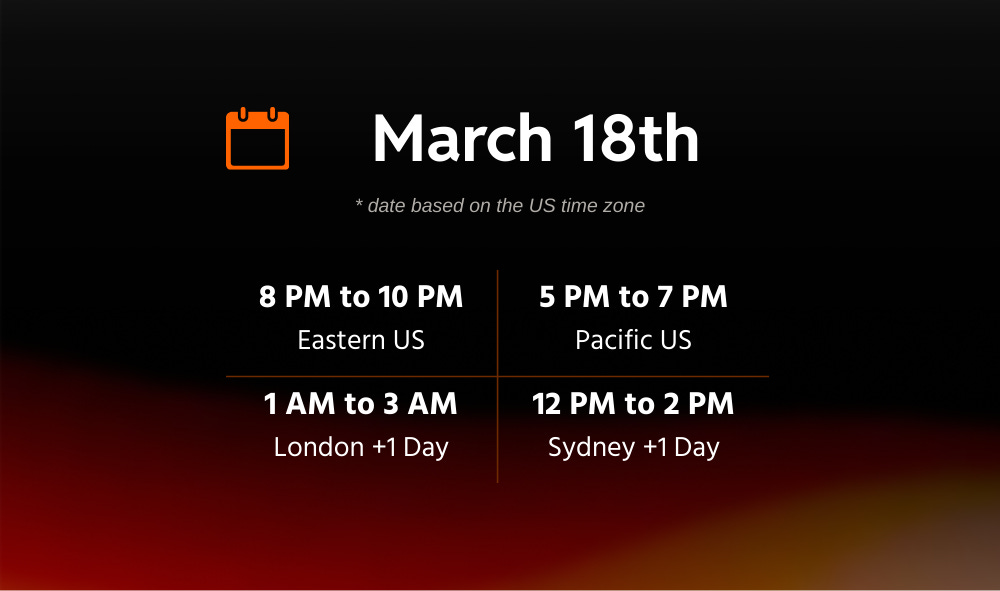
Spots are limited—and the clarity you’ll gain? Game-changing.
Let’s build your portfolio like it’s your next great company!

If you like the newsletter, support us by letting us know what you think (one click); please do that now!
PS...If you're enjoying Managing Tech Millions, please consider referring this edition to a friend.
And whenever you are ready, there three ways I can help you:
Follow me on LinkedIn: Get more insights and real-time updates.
Tune into the Podcast: Dive deeper into wealth strategies and interviews.
Get in Touch: Ready for a bigger move? Let’s talk.

Disclaimer: This newsletter is for informational purposes only and does not constitute financial or career advice. Always consult with qualified professionals before making any decisions based on the information provided.