


👋 Managing Tech Millions by WealthOps 📈 your go-to source for building wealth with tech equity and managing the money that comes with it.
Every week, we'll deliver a concise and powerful lesson on building wealth working for equity compensation or on managing your seven and eight-figure portfolio.

Hey Family Office CEOs,
Four years ago this summer I walked away from the workforce.
Most people would call that retirement. I never have. I call it graduation — and the difference between those two words matters more than people realize.
Retirement, the way most people mean it, is about going offline. Getting served. Winding down. Being done. That’s not what most builders actually want — which is why so many high-earners avoid the word entirely, avoid the plan entirely, and end up working another decade because “retirement” doesn’t feel like anything they’d actually choose.
Here’s the thing most people don’t say out loud: the fear underneath “retirement” isn’t about money. It’s about losing purpose. I watched it happen in my parents’ generation. People who worked hard for decades, retired, and then quietly got lost. They no longer knew what they were doing. They no longer had something pulling them forward. That’s what builders actually dread — not the loss of income, but the loss of the reason to build.
Graduation solves that. You graduate into something. You go build. You run a business that runs and manages your life — and you get to make it into whatever you want it to be. The purpose doesn’t go away. It sharpens. You’re just building for a different owner now — you and your family, instead of someone else’s shareholders.
My dad retired around 74. I walked away decades earlier — not because of a rule, an age, or a milestone. Because I could, and because I chose to. On my terms.
That’s the whole point of this. Not the specific number of years bought back. The fact that when you build the Micro Family Office the right way, the timing becomes yours to decide.
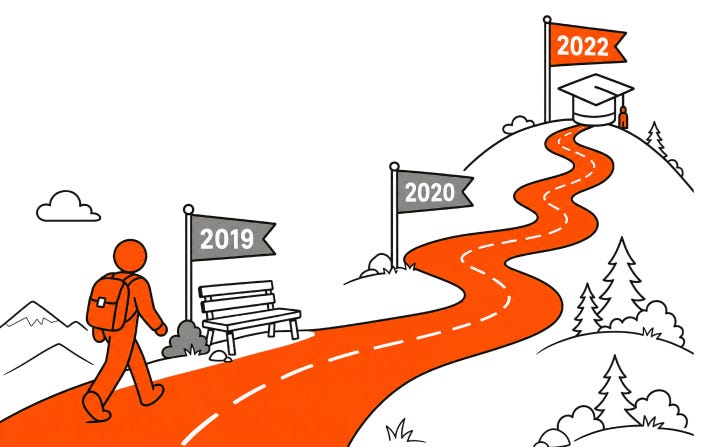
But the real story doesn’t start in 2022.
It starts in 2019.
Because in 2019 I did something most people don’t get to do — and something most people, if I’m honest, don’t handle well the first time. I took a nine-month sabbatical to test-drive my Micro Family Office before I actually committed. No return date pressure. No side gig on the calendar. Just me, my family, and the thing I’d been quietly architecting for a decade.
That sabbatical did two things I didn’t expect. And what I learned from it is what let 2022 be a graduation instead of a face-plant.

Managing Tech Millions is a Weekly Podcast that gives you deep dive conversations into building and growing wealth with myself and other industry experts.
This week, I’m ranking every income investment from best to worst—and the grades only make sense once you know who I’m grading them for.
The investor drives everything: $5M, five years from drawing income, comfortable in private markets. Change that profile and half these grades flip.
A popular pick gets an F: One of the most-pitched income products on the market doesn’t survive the criteria—opaque fees, weak yield, too little flexibility.
The top grade goes to a vehicle most advisors never mention: High yield you can actually keep, with the tax treatment to match.
Private market experience is the multiplier: The same investment that’s a D for a beginner becomes an A when you already know how to underwrite an operator.
Tax is the tiebreaker: Two vehicles with identical yield can land grades apart—ordinary income vs. qualified vs. depreciation-sheltered changes what you keep.
Owning more ≠ diversified: The five dimensions of income diversification—and the concentration trap experienced investors fall into most.

The First Two Weeks Were Weird
I woke up the first Monday of the sabbatical and my phone was silent.
Nobody needed anything. No standup. No board. No press release. No crisis. And I realized, sitting in that quiet, that I’d been running on dopamine hits for the better part of two decades.
The urgent Slack. The all-hands. The next quarterly board deck. The next talk. The next launch. Every hour of my professional life had been engineered around small, frequent dopamine spikes — and my brain had come to expect them the way it had come to expect coffee.
Without them, the first couple of weeks were deeply weird. I wasn’t unhappy. I wasn’t restless in a normal way. I was just… unrewarded, in the neurochemical sense. Something my nervous system had been pulling on for years suddenly wasn’t there.
That was lesson one. You cannot go from a career built on constant dopamine hits to sitting in the quiet without some kind of transition work. Your brain will look for the hits somewhere. If you don’t decide where, it’ll find them for you — in ways that usually don’t serve the life you actually wanted.
I had to force myself into a routine. Not a “retirement routine.” A builder’s routine. Something that gave the same brain the same rewards — from a different source.
What I Learned in the Other Eight Months
Once the routine started working, I turned toward the actual Micro Family Office and started operating it — not just architecting it in the abstract. I ran the cadence. I made real allocation calls. I reviewed real numbers. I sat with the professionals on my team as a principal, not as a busy executive squeezing them in between meetings.
And I learned something honest that took the whole nine months to fully sit with:
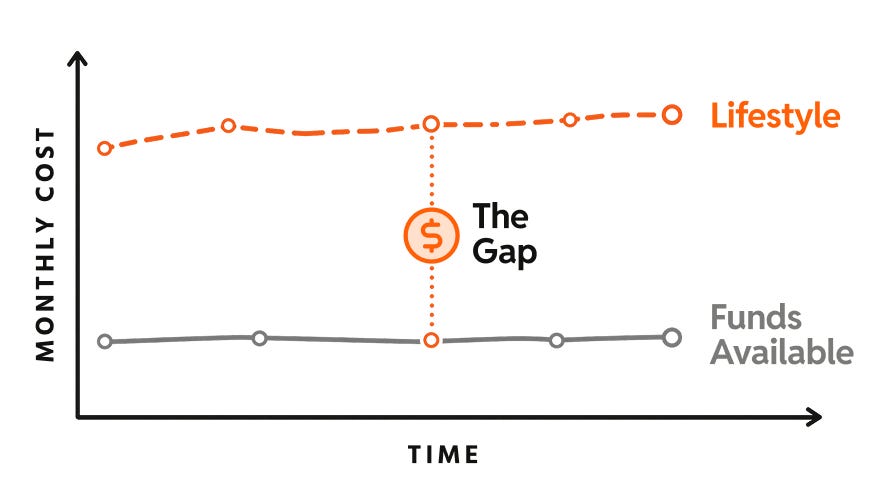
I didn’t have enough to fund the lifestyle we actually wanted long-term.
I could invest in the MiFO — build it, refine it, deepen it. But the withdrawal math for the life we’d actually designed wasn’t there yet. Not quite.
That was the second lesson. And it’s the one that made 2022 possible.
Because instead of forcing an early exit that would’ve squeezed us for the next thirty years, I did something a lot of high-earners resist: I went back to work in 2020.
Not because I loved corporate work. Not because I needed the identity. Because there was more equity on the table, and the sabbatical had made painfully clear that I needed to take it before I walked. So I did.
Two years of work, done cleanly and with intent, to fund the seat I actually wanted to sit in for the rest of my life.
Why 2022 Was Different
By the time I walked away in 2022, three things were true that hadn’t been true in 2019:
1. The MiFO wasn’t a hypothesis. It was already tested. I’d operated it for nine months. I knew what worked, what I needed to build, what I’d been overcomplicating.
2. The withdrawal math actually worked. The additional equity from 2020–2022 closed the gap I’d found during the sabbatical. The lifestyle we wanted was funded, sustainably.
3. I knew what to expect on Day 1. No silent-phone shock. No dopamine crash. I’d already lived through the transition once. I had a routine ready. I had work I was excited to lean into.
That’s why I call it graduation. I finished a program I’d been running on myself for three years. Then I walked into the next thing prepared.
What I Now Teach Everyone I Train
The 170 people training inside the Accelerator are hearing me say some version of this every week:
Build your Micro Family Office on the side first. Test it out. If you can, take a sabbatical — even a short one — to feel what work-optional life actually feels like. Then decide what you’re really building toward.
Most people plan their exit around a number. A magic net worth. A magic income replacement ratio. A magic date on the calendar.
The number matters. But the number isn’t what makes the exit work.
What makes the exit work is knowing what you’re graduating into — and having tested it before you commit. What excites you inside this work? What drains you? What parts do you want to keep? What parts do you want to hand to a specialist? What does a Tuesday actually look like?
You cannot answer those questions from inside a corporate job. You can only answer them from inside the seat. And the sabbatical — even a two-week one — is the cheapest way to sit in the seat before you’re locked in.
What Actually Excites Me Now
For what it’s worth, four years into the actual role, here’s what I’ve found excites me:
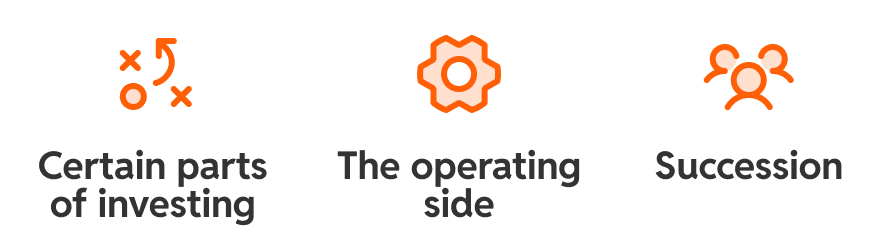
Certain parts of investing — the strategic calls, not the day-to-day
The operating side — cadence, optimization, watching the machine run cleanly
Succession — getting my family involved in the work. The sooner I bring my sons in, the more this actually becomes a generational business and not just a well-managed portfolio.
That last one has become the biggest one. The generational dimension is what makes the whole thing worth doing at scale. A Family Office run for one generation is a job. A Family Office run to compound across generations is a legacy.
Here’s what I’ll tell you plainly, four years in: the greatest freedom I’ve found in this seat is the freedom to build for myself and my family. And I don’t think most people who are still on the corporate side realize how much bigger that freedom actually is. The work I’m doing now is more meaningful than anything I built during the corporate years — because I’m building for people I actually love, on a timeline I control, toward a legacy I get to design.
And here’s the part almost nobody says out loud: it’s also very lucrative. The same skills that built a career for someone else, applied to your own family’s wealth on your own timeline, compound in ways the corporate version never could. Purpose and payoff, in the same seat.
That’s not something I could have named in 2019. I had to sit in the seat to see it.
What This Weekend Is About
Friday is Independence Day.
Most people frame independence as the freedom to stop. Stop working. Stop reporting. Stop grinding. That’s the retirement version — and it’s the one most builders quietly don’t want, which is why they never actually plan for it.
The deeper version — the graduation version — is different. It’s the freedom to build something you actually chose, on terms you actually set. A business that runs and manages your life. One that you shape into whatever you want it to be. That takes preparation. It takes testing. It takes knowing what you’re graduating into, not just what you’re leaving behind.
Take the weekend to think about your version. Not the number. The seat.
What does the Tuesday after you walk away actually look like? Do you know? Have you tested it? Have you sat in the quiet for two weeks and felt what it feels like?
If not — the invitation is to start. A weekend counts. A week counts more. A month starts to change your plan entirely.
Happy Fourth.
Let’s keep building.
—Christopher
P.S. The last three issues walked through the structure of the Family Office CEO role. This one walked through what actually happens before you sit in the seat — the preparation that makes graduation possible. If reading this made you think “I need to test-drive this before I commit” — the on-ramp is The WealthOps Way. Two free hours that show you what the seat actually looks like from the inside.
👉 Start here: The WealthOps Way
Go Deeper
🎯 Start here if you’re new — The WealthOps Way Free, 2-hour live workshop. The foundation: what a Micro Family Office is, the two portfolio models, the 7 Components, and your own Legacy Statement.
Recent arc (Wk 24 → 25 → 26 → this):
The Second Career I See Coming — the transition pattern
I Think a New Job Is About to Get Named — the structural prediction
I’m Training 170 People to Be Family Office CEOs — the practitioner proof
Today: the preparation story — how graduation actually gets built
New here?
I’m Christopher. I built my Family Office after my 2012 IPO, spent over a decade studying how it actually works, took a sabbatical in 2019 to test-drive it, went back for more equity in 2020, and graduated from the workforce in 2022. Now I teach the framework at WealthOps. If this is your first issue — welcome. The best place to start is The WealthOps Way (wealthops.io/go). Free workshop, full framework, no pitch.
This is education, not advice. Learn the systems, don’t copy blindly.

Join me for The WealthOps Way—our free live workshop designed to help you stop guessing and start running your wealth like a business.
You’ll go from scattered to strategic as you craft your own Portfolio Thesis—the foundation of everything that follows.
Spots are limited—and the clarity you’ll gain? Game-changing.
Let’s build your portfolio like it’s your next great company!

If you like the newsletter, support us by letting us know what you think (one click); please do that now!
PS...If you're enjoying Managing Tech Millions, please consider referring this edition to a friend.
If this was useful, tap the ❤️ button. It tells Substack to show more writing like this.
And whenever you are ready, there three ways I can help you:
Follow me on LinkedIn: Get more insights and real-time updates.
Watch on YouTube: Dive deeper into wealth strategies and interviews.
Get in Touch: Ready for a bigger move? Let’s talk.

Disclaimer: This newsletter is for informational purposes only and does not constitute financial or career advice. Always consult with qualified professionals before making any decisions based on the information provided.