


👋 Managing Tech Millions by WealthOps 📈 your go-to source for building wealth with tech equity and managing the money that comes with it.
Every week, we'll deliver a concise and powerful lesson on building wealth working for equity compensation or on managing your seven and eight-figure portfolio.


Today, in 5 minutes or less, you’ll learn:
📊 What a year of building looks like, in real numbers
🎯 The six kinds of wins I watched happen over and over
🗺️ The 15-minute check-in to run on your own year, member or not

Hey Family Office CEOs,
The first member joined in late September of last year.
One person, one seat, and a promise: that someone with real wealth could learn to run it the way the ultra-wealthy do, as the CEO of their own family office, alongside other people doing the same work.
A year later, there are 246 members across 45 states and 19 countries.
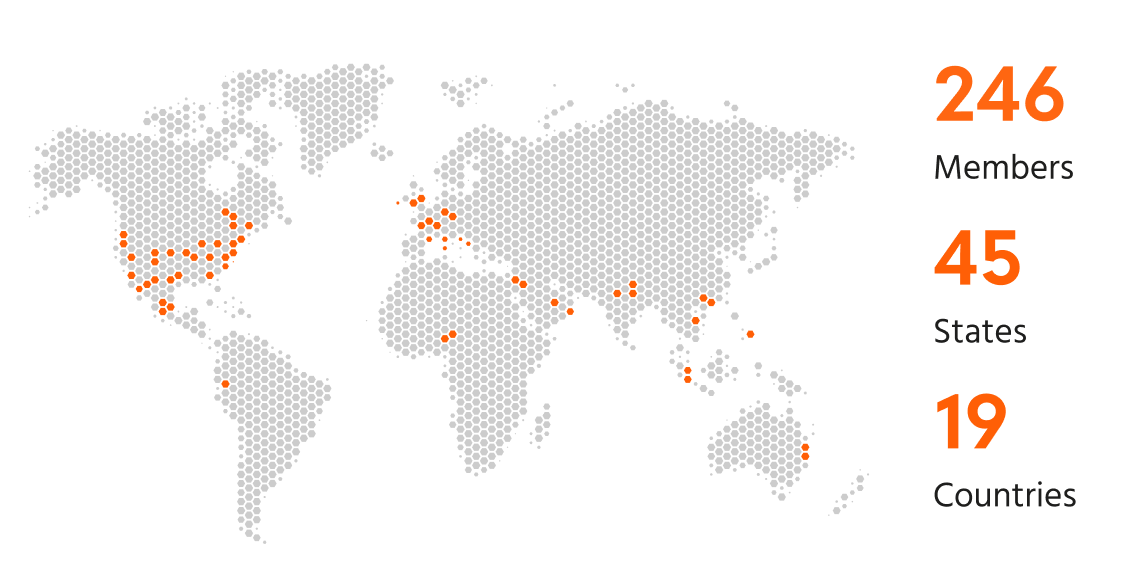
But the number I keep thinking about is 80. That’s how many members have brought family onto their seat. Nobody signs up their spouse or their kids for a course. You bring your family into something you’re building.
So this issue is about what members did this year, pulled straight from the wins they’ve posted in our community.

Managing Tech Millions is a Weekly Podcast that gives you deep dive conversations into building and growing wealth with myself and other industry experts.
This week, I’m breaking down why $5 million is the point where your wealth stops being a number and becomes a business—and the seven rules that change when you cross that line.
Concentration Becomes Your Biggest Risk: The single position that built your wealth can now cost you more than a year’s salary in one bad day. That makes unwinding it a deliberate decision, with a timeline, a tax plan, and someone who owns it.
Taxes Go from Deadline to Strategy: Filing on time only records what already happened. The decisions that move your tax bill get made the year before you file, and that changes who you need on your team.
More to Protect: The bigger the number, the bigger the target. To know when umbrella coverage and entities belong in the plan, ask two questions: what could cause a claim, and what could that claim reach?
Lifestyle Grows into the Number: Net worth and income are two different numbers. Five million on a statement doesn’t pay your bills unless it’s set up to, and most people find out when the paycheck stops.
Someone Else Has to Run It: If you’re gone tomorrow, your family needs three things: the inventory, the strategies, and the purpose behind them. Purpose is the one people skip, and it’s the hardest to rebuild later.
A Floor, Not a Ceiling: Raising kids who aren’t entitled means showing them what your family’s money is for, and practicing it every year so it sticks.
The Rule Nobody Teaches: Most of the industry is paid to run your wealth for you, not to teach you how it works. You don’t need to become every specialist. You need to know the board.

The Year in Numbers
We’ve run more than 65 live implementation calls this year, over 3,200 hours together in the room. More than 150 members have shown up live, cameras on, building their businesses in front of their peers.
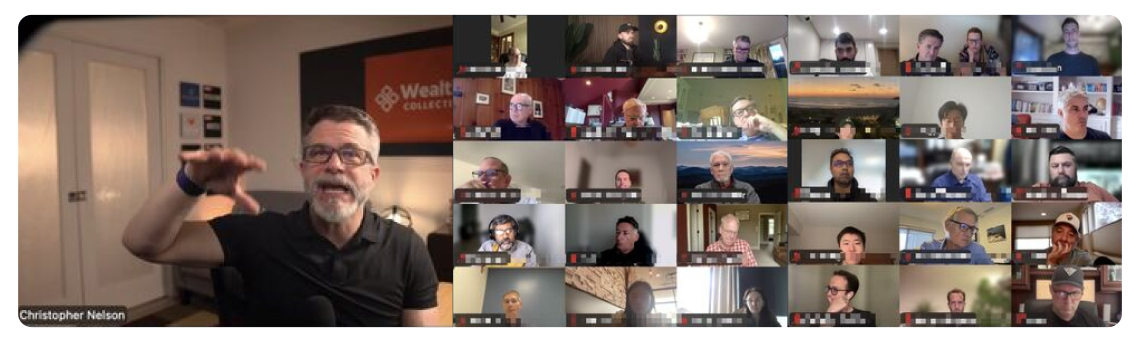
202 members have started the build, and 53 have completed a Discovery review, an honest look at where their wealth, their structure, and their family stand.
Family members have joined those live calls more than 90 times: spouses, adult kids, and nieces and nephews being read in on a plan that will one day be theirs to help run.
The members span the exact range I built this for, from just over $1 million to more than $30 million, with at least half at $5 million or more.
The Wins Nobody Posts on LinkedIn
Every month, members post their wins in our community, and I went back through all of them this week. Almost none of them are the kind of thing you’d announce publicly.
1. They architected first, then built the structure
Members are doing this in the right order. Before forming anything, they’re doing the architecture work: writing a Legacy Statement, getting clear on what the portfolio needs to pay them, and setting an investment thesis and policy with targets for growth, income, and preservation. One family worked out exactly what they’d need to live on through the college years, then dialed in the financial side of their legacy. Another agreed on target returns for each of their three buckets before restructuring the portfolio.
Then they built. Members formed holding companies, management companies, and trusts. One family finished its Legacy Statement and formed both companies in the same month. Another set up a trust and three asset companies in two months, then took a long trip to celebrate a spouse’s early retirement. And one family took the step most people skip: they moved two brokerage accounts and a handful of private investments out of their personal names and into the holding company.
2. They brought their spouse into the room
A member and his wife held their first quarterly meeting this fall. He said it wasn’t perfect, but they got on the same page, looked through their finances together, and walked out with a list of actions for next time. Another member’s spouse retired early to run the family office.
Another family is preparing the formal launch of their family office this month. They introduced the idea to their daughters last year, while they were still building it. Now they’re bringing them in as real advisors.
I’ve seen this all through the year, and it’s happening faster now. It’s the five-level ladder from a few weeks ago, playing out in real families.
3. They said no, and they said yes the right way
One of the wins I love most was an investment that didn’t happen. A member and his brother started a family investment committee, vetted their first private equity real estate opportunity together, and turned it down over the fees and a thin track record.
Another member did the opposite with one he liked. Before investing, he asked the sponsor to model what a two-point jump in long-term interest rates would do to the numbers. They did, it still held up, and he went in with confidence. One said no and one said yes, and both made the opportunity prove itself first.
4. They put the money to work for income
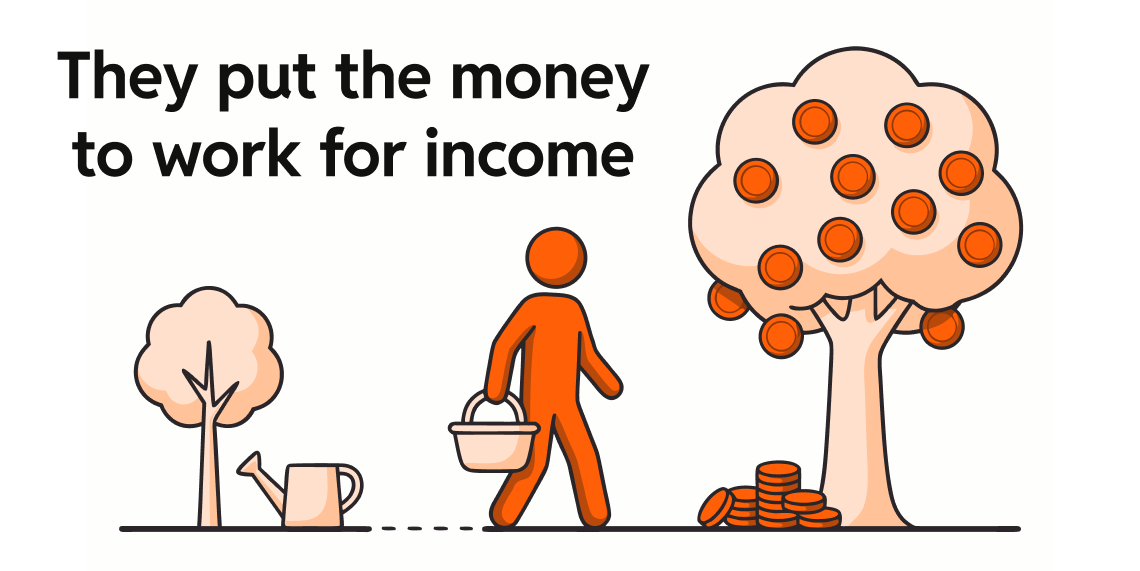
Members repositioned fixed-income holdings that weren’t producing enough. One finished the portfolio worksheet and sold a vacation rental that had been a solid growth asset, to free up the equity for steadier income and more flexibility. Several moved assets from the growth side of the portfolio to the income side, with more planned. Each of them stopped asking “how big is my number?” and started asking “what does my number pay me?”
5. They built the team and the operating rhythm
A member hired a new CPA who had worked inside a single family office, and now runs a monthly board meeting. Another invited a trusted friend and business associate to sit in on family meetings as an outside advisor. Sharing the financials was hard, and they did it anyway.
Others built the plumbing: one set of books across the holding company, the management company, and personal accounts, with dashboards that pull their numbers together automatically.
One member wrote that every advisor brings a perspective and a bias, but someone has to hold the overall view of how it all fits together, and that’s the CEO’s job.
6. They found each other
Members are now meeting in person in their own cities. Two members who’d only known each other from our calls met for coffee, talked about their families, their careers, and what they were building, and made plans to do it again. Others are posting in the community to find members nearby.
The Experts and Partners in the Room
This year we brought specialists in to teach the parts that need a professional.
A tax and entity firm walked members through how the structure and the tax plays fit together. An estate and asset-protection attorney took on trusts, titling, and the order to build things in, and members came back with so many questions we started a list for a second session. September was Insurance Month: health coverage after the W-2, then home, auto, and umbrella coverage from two independent private-client brokers who answered the same questions so members could compare. Along the way we covered the macro picture, longevity, and how to vet a nonprofit before you give. October is Private Equity Month.
Behind the sessions is a partner program of vetted Certified Tax Planners, estate attorneys, and insurance specialists members can hire when it’s time to execute. That’s the model: we teach, you lead, and the professionals you choose do the work.
What I’ve Seen, and the Hardest Stretch
For me, the biggest win of the year has been watching Family Office CEOs develop. They’re asking critical questions, and they’re bringing their families into a generational business. Families are having open, honest conversations about wealth. Kids are looking at their parents differently, as business owners and builders. And siblings don’t see the family’s wealth as a ceiling they’ll live under. They see it as a foundation they can keep building the family from.
This is the most rewarding work of my life, and it’s no accident. When I wrote my Legacy Statement, the purpose I put down was “to serve first-generation wealth creators so they can design a life of freedom.” This year, I got to watch that happen.
The hardest stretch was my own. I was moving my family to Spain and executing our family business plan, all while running a growing business. I was stretched, and I was pushed to keep being a good CEO of my family office through all of it. What carried us was the systems we’d built and the great people on our team, who kept things moving when I couldn’t hold every piece myself.
The Predictions, Checked
I put three predictions on the record this year and promised to check them. Here they are, word for word.
June 4:
“More people are going to own and operate their own Micro Family Offices in the next ten years than at any point in the history of wealth management.”
Holding. 246 people in 45 states and 19 countries are doing exactly this right now, most of them well below the $100 million mark I ran into when I first googled how to build a family office.
June 18:
“By 2030, ‘Family Office CEO’ will be a recognized professional role — with its own training tracks, peer associations, and credentialing pathways.”
Too early to call. The role doesn’t have institutional standing yet. What it has is more than 150 people showing up live to practice it together, and members starting to meet for coffee in their own cities.
September 11:
“By 2030, every ultra-high-net-worth individual will be running their wealth like a family office — aided significantly by AI. The ones who win will be the ones who learned the playbook first.”
A month old, and I’m standing by it. Members are already building their own AI-assisted bookkeeping and income dashboards, with themselves still making the calls.
What Year Two Looks Like
When I started, I built this for people up to about $30 million in net worth. The ceiling turned out to be closer to $100 million. Families at that level have the same struggles, and I haven’t found anywhere else that trains them to be the CEO of their own wealth.
And people don’t want more services. They don’t want to be clients. They want partners they can build with.

My bet for year two, on the record:
By our second anniversary, the number of members with more than $30 million in net worth will more than double. The families with the most to steward want the training to run it themselves.
Come back in a year and check me.
Key Takeaways
The real wins are quiet. An investment thesis written, a trust funded, a first family meeting held, a bad opportunity turned down.
Family is the leading indicator. Eighty members brought family onto their seat. When the family enters the room, the wealth starts becoming a business with a succession plan.
The bets are holding. Three predictions checked, and a new one on the record.
Your Move This Weekend
Run your own one-year check-in. Fifteen minutes, member or not.
Write one line for each area, comparing twelve months ago to today:
Vision and strategy: did you have a written Legacy Statement a year ago? Do you now?
Wealth management: could you name your targets a year ago? Can you now?
Business operations: could you close your books on time a year ago? Can you now?
People: who was in the room a year ago? Who’s in it now?
Then circle the area that changed the least. That’s your focus for this year’s annual review.
Completion signal: one circled area.
Held beats pretty.
To every member who posted a win, asked the hard question in front of peers, and went home and did the work: thank you. This year was yours.
And if you’re reading this from the outside, wondering whether it’s for you:
“Whatever you’ve already built or led, WealthOps builds you into the CEO of your own wealth — putting the skills you’ve already proven to work on a mission that’s finally your own.”
Let’s keep building.
—Christopher
P.S. If this is the year you want to stop reading about it and start running it, The WealthOps Way is the place to begin, the two-hour live workshop where I walk through the whole rulebook. The membership starts with the Micro Family Office Accelerator, Year 1 of WealthOps.
👉 Start here: The WealthOps Way
Go Deeper
The predictions, in full:
I Think a New Job Is About to Get Named — June 18
By 2030 AI Runs Your Wealth. Here’s the Trap. — September 11
New here?
I’m Christopher. I built my Family Office after my 2012 IPO — after googling “how to build a family office” and hitting the $100M wall the industry has quietly agreed on. Now I lead a community of 246 practitioners at WealthOps, and we’re building Eterna, the AI platform behind our approach. If this is your first issue — welcome. The best place to start is The WealthOps Way (wealthops.io/go). Free workshop, full rulebook, no pitch.
This is education, not advice. Learn the systems, don’t copy blindly.

Join me for The WealthOps Way—our free live workshop designed to help you stop guessing and start running your wealth like a business.
You’ll go from scattered to strategic as you craft your own Portfolio Thesis—the foundation of everything that follows.
Spots are limited—and the clarity you’ll gain? Game-changing.
Let’s build your portfolio like it’s your next great company!

If you like the newsletter, support us by letting us know what you think (one click); please do that now!
PS...If you're enjoying Managing Tech Millions, please consider referring this edition to a friend.
If this was useful, tap the ❤️ button. It tells Substack to show more writing like this.
And whenever you are ready, there three ways I can help you:
Follow me on LinkedIn: Get more insights and real-time updates.
Watch on YouTube: Dive deeper into wealth strategies and interviews.
Get in Touch: Ready for a bigger move? Let’s talk.

Disclaimer: This newsletter is for informational purposes only and does not constitute financial or career advice. Always consult with qualified professionals before making any decisions based on the information provided.