


👋 Managing Tech Millions by WealthOps 📈 your go-to source for building wealth with tech equity and managing the money that comes with it.
Every week, we'll deliver a concise and powerful lesson on building wealth working for equity compensation or on managing your seven and eight-figure portfolio.


Today, in 5 minutes or less, you’ll learn:
📈 How one couple went from scattered pieces to a clear plan in a year
📅 The four meetings they now run their family office on
🗺️ The five dates to put on your 2027 calendar this weekend

Hey Family Office CEOs,
Earlier this month, a member couple held their monthly review.
They sat down in their home office with one hour, a set agenda, and a recording running so the minutes go straight into their files.
One action item came out of that hour: meet with the tax planner. So they did, and they walked in with real numbers for the year to date. They decided on year-end giving and their tax moves while there was still time to act.
About a year ago, none of this existed.
One of them was stepping out of a long corporate career. Like a lot of people in that spot, nearly all of their wealth sat in growth. They had a lot of pieces, but nothing was organized: no plan for what they were building, no books for their personal finances, no meetings. They described it as chaotic and unstructured, and they were losing sleep over it.
Within a year, they’ve architected a clear plan for what they’re building, and they’re running it on an operating rhythm. Last week, they walked our members through the whole journey, with their real agendas on the screen.

Managing Tech Millions is a Weekly Podcast that gives you deep dive conversations into building and growing wealth with myself and other industry experts.
This week, I’m breaking down the five rules I’d hand anyone who just went through an IPO—and why the next twelve months decide how much of that wealth you actually keep.
Read Your Agreement: Before you sell anything, know your lockup, your trading windows, whether a 10b5-1 plan is open to you, and exactly which grants you hold, because each one is taxed differently.
Divest Like It’s Your Job: Most people spend all their energy on where to invest and almost none on getting money out of one company. Divesting is its own job, with its own calendar.
Park It Before You Place It: The one thing I did differently in my later IPOs. Where the money sits while you think, and why parked money can wait for a good decision.
Build From the Bottom: After a big win in a high-growth company, the instinct is to jump into venture. Here’s the order I build in instead, and why more of the same kind of company isn’t diversifying.
Get the Right Specialist: The most expensive mistake I made after my IPOs. The difference between compliance and strategy, and one question that tells them apart.
Who This Is Built For: Anyone holding newly liquid stock after an IPO, at Anthropic or anywhere else, who wants a plan for the next twelve months before everyone else hands them one.

They Started With Almost Everything in Growth
When you come out of a long corporate career, your wealth is usually company stock and stock compensation, all concentrated in growth.
When they joined, they went straight into private equity and venture capital. They told the group it was fun, and the underwriting was interesting.
Then they looked at their whole portfolio and saw the problem.
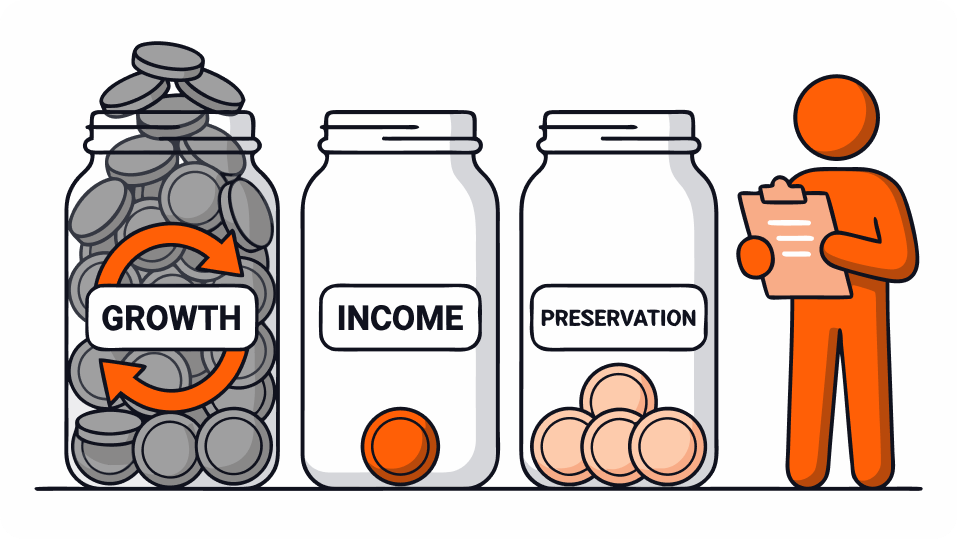
They had only moved money around inside growth.
Their portfolio was close to upside down, heavy in growth and light on income. And with a paycheck going away, they needed cash flow.
I see this pattern with a lot of people coming out of tech careers. In Wealthy Families Say No to Most Investments. Here’s Their Filter., I describe it as hiring for the same growth role over and over until nobody on your team is paid to send you checks.
First, They Wrote a Three-Year Plan
Before they could fix the portfolio, they needed to know what they were building. They had all the pieces, and nobody was connecting them. I walk through that exact situation in Is a Micro Family Office Worth It at $5M? An Honest Answer.
So they wrote a three-year plan. They wanted something living they’d use, so they kept it to one page. It covers three things across those three years: why their family office exists, how they run it, and where their money is working for them.
He gave the group a simple definition of planning. Look at how you’re doing in each area, then ask whether that’s where you want to be. As life changes, the answer changes, so the plan keeps moving.
The plan pointed to the work: build income, get the books under control, and put a rhythm on the calendar.
Then They Built the Income They Were Missing
Five months ago, by his own account, he didn’t know what a covered call ETF was. He didn’t know what MOIC meant. He had spent his whole career in public markets.
Today they hold a couple of covered call ETFs. They’ve made their first private credit investments and put money into real estate funds. They’re building an income sleeve and making sure preservation is where it needs to be.
They were also honest about the hard part. Income-generating assets don’t turn on overnight. There’s a lull between selling growth and getting paid by income, and they’re living through it right now.
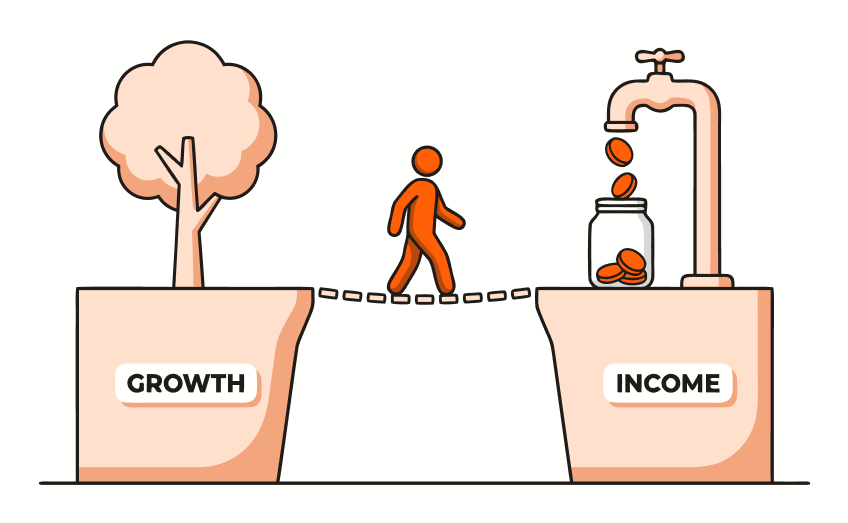
It would have been easier to stay in their comfort zone. The discipline forced them to rethink where their money was working and act on it.
I made the same shift myself. In 2012, 97% of my portfolio was tied to a single stock. I walk through how I rebuilt it to produce cash flow in this video.
They Brought the Books In-House, and It Was Painful at First
The same year, they brought their bookkeeping in-house.
An outside firm had been handling it at a high level, and there was no book for their personal finances at all. So she started one herself, using the chart of accounts from our curriculum. She had never run books like this before, and she told the group it was painful.
The first month was full of variances she had to dig into. By the second month there were almost none. By the third, none. Now it gets faster every month, and she enjoys it.
The books also showed them something new. Every month, the balance sheet shows which accounts are still sitting in their personal names, waiting to move into the family office. The balance sheet becomes a checklist.
Now Four Meetings Run the Whole Thing
With the portfolio and the books in motion, they built the rhythm to run it. One of them spent more than 30 years in the corporate world, so they built it the way a company would.
Weekly: a quick check. They update their numbers about once a week for a directional read on the month.
Monthly: a one-hour review. They close the books, look at cash flow and investments, and work through open action items. It’s tactical, and by their own account it’s messy.
Quarterly: a business review. About two hours, face to face, after each quarter closes. They review the last 90 days against their targets and spend most of the time right now on the portfolio.
Annual: an owners meeting. Strategy and legacy. They just held their first one, with their kids in the room.
Once the build is done, the rhythm takes roughly three to five working weeks a year. I break down all four beats in How Much Time Does Running Your Own Family Office Actually Take?
One rule keeps the meetings short. Everyone does the reading before they walk in. Nobody sees the numbers for the first time in the meeting, so the hour goes to deciding. That’s how the tax planner meeting happened.
What Changed in One Year
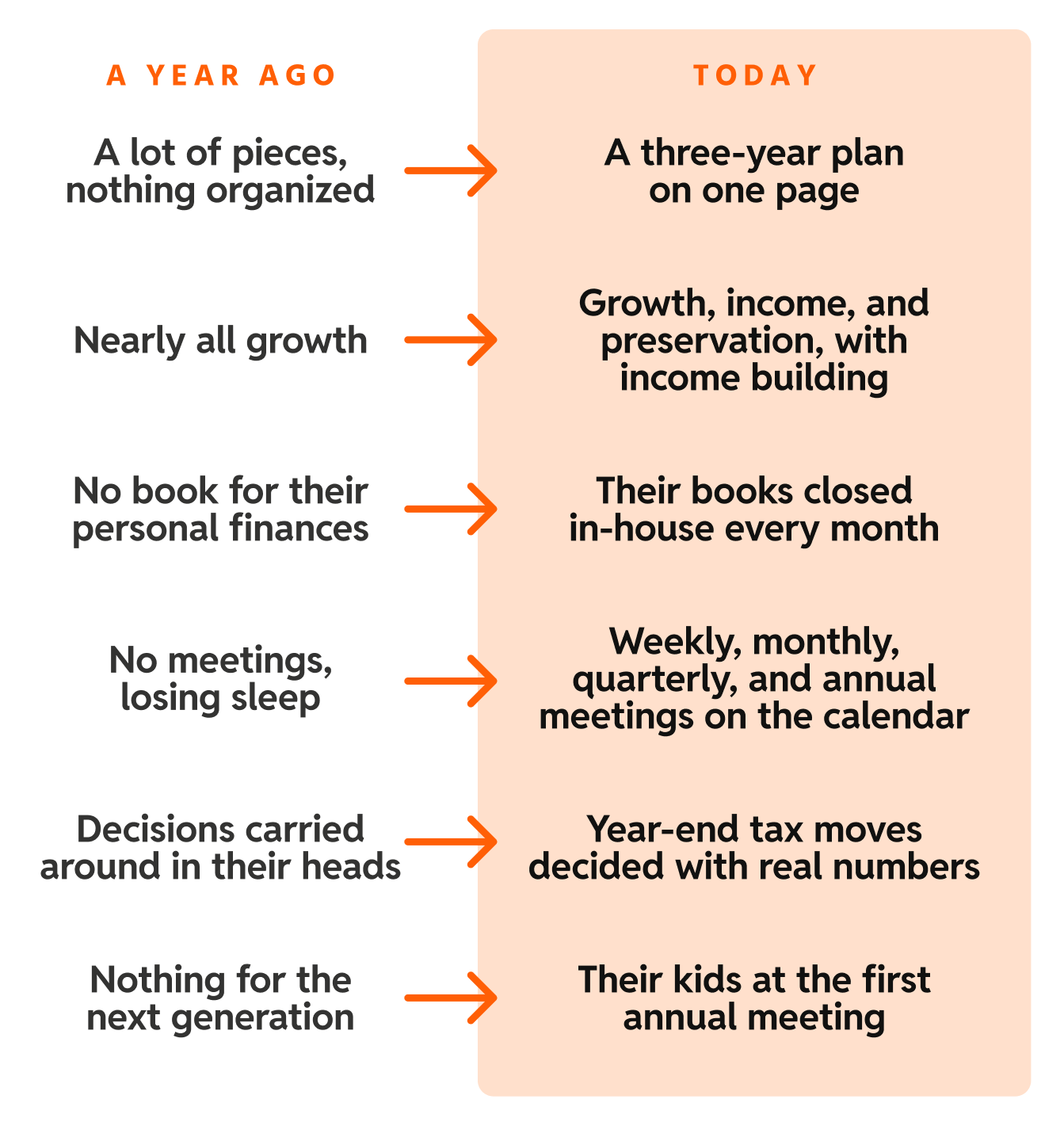
They’re not finished. Some assets are still in their personal names, and they still react week to week more than they’d like. They’re running the family office while they finish building it.
They have a plan for what they’re building and a rhythm to run it. This is what an operational family office looks like.
Awkward at First Means You’re Doing It Right
For the first several months, the meetings felt clunky. They live together, and suddenly they were sitting down talking to each other like business partners.
My own version took years to build, and it was more painful. For a long stretch, I was the only person in the room. They did this in a year, together, alongside a community of people doing the same work.
I told the group what I’ll tell you. It’s not going to be pretty at first. It’s going to feel weird. That means you’re doing it right.
Your Kids Inherit a Business That’s Already Running
I told the group that transitioning something that’s operational is different than transitioning something that was never built.
This couple is building the discipline themselves first, then bringing their kids into it. When the next generation steps in, there’s a business already running, with a portfolio, books, dates, and decisions on file.
It’s also how a plan actually gets used. Your 2027 plan sets the direction for the year. The quarterly meetings are what keep you managing to it. I run my own annual review every Q4, and I wrote about it in Why I Start My Q4 in September.
Key Takeaways
A year is enough to go from scattered pieces to an operational family office. First the plan, then the build, then the rhythm.
Check what each new investment adds to the whole. Moving from public stock into private equity and venture can feel like diversifying while everything stays in growth.
The rhythm is what holds it together. Do the reading before each meeting and spend the meeting deciding.
Your Move This Weekend
This couple puts their whole year on the calendar in advance, with the agenda in every entry. Do the same for 2027.
This weekend, open your family calendar and book five dates:
1. Four quarterly reviews. One after each quarter closes, so the first one in April reviews January through March. This couple runs theirs in about two hours. Once you’re fully running, I recommend up to a day and a half to pick the quarter’s priorities.
2. One annual meeting. Two to three days, planned like a company off-site, away from home if you can. This is where you review the year and set the next plan.
Put a one-line agenda in each entry, and invite your spouse or partner.
If you want the bigger step, add a one-hour monthly review on the same day each month.
Completion signal: five dates on your 2027 calendar before Monday.
Then hit reply and tell me when your first 2027 review is.
Held beats pretty.
A year ago, this couple was all growth and losing sleep. Wherever you’re starting, put the dates on the calendar.
Let’s keep building.
—Christopher
P.S. Everything in this issue, the portfolio shift, the books, and the four meetings, is what members build in Year 1 of the Micro Family Office Accelerator. This couple did it in about a year, alongside a community doing the same work. Start with The WealthOps Way.
👉 Start here: The WealthOps Way
Go Deeper
🎯 Start here if you’re new — The WealthOps Way Free, 2-hour live workshop.
⏱️ If you want to know how much time it actually takes — How Much Time Does Running Your Own Family Office Actually Take? The four beats, and why a well-run family office takes roughly three to five working weeks a year.
🗺️ The full overview — How to Start a Micro Family Office FROM SCRATCH (3 Steps) What you architect, what you build, and the rhythm that runs it once it’s live.
More on YouTube:
Wealthy Families Say No to Most Investments. Here’s Their Filter. — growth, income, and preservation, and the filter for each new investment
Is a Micro Family Office Worth It at $5M? An Honest Answer — when you have all the pieces but nobody connecting them
My move from a single-stock portfolio to cash flow — how I rebuilt mine after 2012
New here?
I’m Christopher. I built my Family Office after my 2012 IPO, after googling “how to build a family office” and hitting the $100M wall the industry has quietly agreed on. Now I lead a community of more than 240 practitioners at WealthOps, and we’re building Eterna, the AI platform behind our approach. If this is your first issue, welcome. The best place to start is The WealthOps Way (wealthops.io/go). Free workshop, full rulebook, no pitch.
This is education, not legal, tax, or investment advice.

Join me for The WealthOps Way—our free live workshop designed to help you stop guessing and start running your wealth like a business.
You’ll go from scattered to strategic as you craft your own Portfolio Thesis—the foundation of everything that follows.
Spots are limited—and the clarity you’ll gain? Game-changing.
Let’s build your portfolio like it’s your next great company!

If you like the newsletter, support us by letting us know what you think (one click); please do that now!
PS...If you're enjoying Managing Tech Millions, please consider referring this edition to a friend.
If this was useful, tap the ❤️ button. It tells Substack to show more writing like this.

And whenever you are ready, there three ways I can help you:
Follow me on LinkedIn: Get more insights and real-time updates.
Watch on YouTube: Dive deeper into wealth strategies and interviews.
Get in Touch: Ready for a bigger move? Let’s talk.

Disclaimer: This newsletter is for informational purposes only and does not constitute financial or career advice. Always consult with qualified professionals before making any decisions based on the information provided.