

👋 Managing Tech Millions 📈 your go-to source for building wealth with tech equity and managing the money that comes with it.
Every Thursday, we'll deliver a concise and powerful lesson on building wealth working for equity compensation or on managing your seven and eight-figure portfolio.


Today, in 5 minutes or less, you’ll learn:
📊 The three Evergreen stages — Pre-Green, Green, and Evergreen — and exactly what defines each one
🎯 Which stage you’re actually in (not which stage you hope you’re in)
🗺️ Why the ultra-wealthy focus on income generation — not accumulation — and how to start thinking the same way

Hey Portfolio CEOs,
Most people tracking their wealth ask one question: what’s my net worth?
It’s the wrong question.
Net worth tells you how much you’ve accumulated. It doesn’t tell you if your wealth is working. The question that actually matters is simpler — and most people have never been asked it.
Where does your income come from?
If the answer is “my job” — you’re Pre-Green.

Managing Tech Millions is a Weekly Podcast that gives you deep dive conversations into building and growing wealth with myself and other industry experts.
This week, I’m breaking down the 7 components that every family office in the world runs on—and why wealth isn’t built through investments, but through systems.
It’s Not About Stock Picking: Why most people are solving the wrong problem
The 7 Core Components: The system behind every $50M–$5B family office
From Chaos to Coordination: Why scattered accounts and siloed advisors hold you back
How the System Actually Works: Why each component depends on the others to function
Operate Like a Business: How to turn your portfolio into a structured, income-generating machine

The Framework: Three Stages, One Goal
The Evergreen Model describes a fundamental shift in how wealth works — from a storage vault you deplete to an income engine that runs indefinitely.
Most people in the $1M-$30M range are somewhere in that transition. The three stages describe where you actually are in that journey.
Stage 1: Pre-Green
Your wealth is accumulating, but it’s not generating income. Your portfolio is made up of growth assets — stocks, index funds, maybe some real estate — but you’re not receiving distributions. If you wanted cash from your portfolio, you’d have to sell something.
Your W-2 is funding your life. Your portfolio is growing in the background.
This isn’t a failure. It’s a starting point. Most people with $1M-$5M are Pre-Green. You’ve built wealth — you just haven’t built an income engine yet.
Stage 2: Green
Your portfolio is starting to produce income. You might have real estate distributions, dividends, some alternatives generating cash flow. A meaningful portion of your monthly expenses could theoretically be covered by portfolio income.
But you’re not there yet. You still need your W-2 to bridge the gap. Remove it, and you’d need to draw down the portfolio.
Green is the transition zone — where most people in the $3M-$10M range sit once they’ve started building toward the Evergreen model.
Stage 3: Evergreen
Your portfolio generates enough income to fund your lifestyle. The principal stays intact — and grows. Your W-2 is optional.
This is the goal. Not retirement in the traditional sense. Work because you want to, not because you have to. Your wealth engine runs whether you’re working or not.
“The ultra-wealthy don’t accumulate wealth to deplete it. They build income engines that generate indefinitely. Same assets, different architecture.”
The Second UHNW Principle — and Why It Changes Everything
The seven principles of ultra-high-net-worth wealth management aren’t abstract philosophy. Principle 2 is direct:
Generate income from assets, not asset sales.
Traditional retirement planning tells you to accumulate, then systematically sell. The 4% rule assumes you’ll deplete roughly 4% of your portfolio each year. Run the numbers over 30 years and the outcome is predictable: smaller portfolio, lower purchasing power, zero legacy.
The Evergreen model rejects this entirely.
The goal isn’t to own assets you can sell later. It’s to own assets that pay you.
A storage vault: You accumulate. You deplete. You hope it lasts.
An income engine: You build. It pays you. The principal compounds.
Same portfolio size. Opposite philosophies. Opposite outcomes over 20 years.
Where I Was
When I hit the IPO in 2012, I was Pre-Green.
$3-4M. Managing my own stock portfolio. No distributions. No income-generating assets. Every dollar of my lifestyle came from my W-2.
I didn’t know there was a different model. My frame of reference was “accumulate until you can retire” — standard advice, not wrong for most people, but not the framework the ultra-wealthy use.
The conversation with my friend — who’d spent his career running family offices — changed my thinking completely. He asked me a simple question: “How much does your portfolio actually pay you?”
The answer was zero.
“That’s the first thing to fix,” he said.
That shift — from accumulation mindset to income generation mindset — took years to implement. But the conceptual shift happened in one conversation. And it reframed everything.
The Self-Assessment: Where Are You Actually?
Diagnose your stage honestly. Not where you’re heading — where you are today.
You’re Pre-Green if:
Your portfolio generates no regular distributions
You’d need to sell assets to create cash
Your lifestyle is 100% funded by W-2 income
Your investment strategy is primarily growth-focused (stocks, index funds)
You’re Green if:
Your portfolio generates some income — dividends, distributions, rental cash flow
That income covers a portion of expenses (roughly 20-50%)
You still need your W-2 to cover the gap
You have at least some alternative investments generating yield
You’re Evergreen if:
Your portfolio income covers your lifestyle expenses
The principal stays intact — and grows
Your W-2 is genuinely optional
Removing your salary wouldn’t require you to sell anything
Most people reading this are Pre-Green or early Green. That’s expected. The Evergreen model isn’t taught at your wealth level — which is exactly why most people with $5M-$15M are still accumulating without an income architecture.
What Your Stage Actually Tells You
Your stage determines what to build next — not your net worth.
A Pre-Green investor with $8M and a Green investor with $3M are solving different problems.
The Pre-Green investor needs to understand how to design a portfolio that generates income — what assets, what structure, what allocation philosophy. They haven’t built the income engine yet.
The Green investor needs to close the gap — more income-generating assets, better yield, the right structure to protect those distributions. They’re in the transition.
The Evergreen investor is optimizing. Not building from scratch.
Net worth tells you how much capital you’re working with. Stage tells you how that capital is actually deployed — and what it needs to do next.
Key Takeaways
Net worth is the wrong metric — your stage (how your portfolio generates income) matters more than how much you’ve accumulated
Three stages, one goal — Pre-Green (accumulating, no income), Green (transitioning, some income), Evergreen (income-funded, W-2 optional)
Income generation is the shift — Principle 2 of UHNW wealth management: generate income from assets, not asset sales
Your Action This Week
Answer this one question honestly: Of your total monthly expenses, what percentage is covered by portfolio income today?
Not what you’re planning to build. Not what you’re targeting. What’s actually flowing today.
Zero? You’re Pre-Green. Ten to fifty percent? You’re Green. One hundred percent? You’ve arrived.
Knowing where you are is the prerequisite for knowing what to build next.
Let’s keep building.
—Christopher
P.S. Next week: why net worth is the wrong thing to optimize for — and what metric actually tells you if you’re making progress. It changes how you read your own portfolio.
Go Deeper
The infrastructure behind it: What Is a Micro Family Office in 2026? — the 7 components that create the architecture supporting an Evergreen portfolio.
Live workshop: The WealthOps Way — free, 2 hours, live. Walk through the framework and identify exactly where to start.
Subscribe: Weekly frameworks, systems, and practitioner insights → Managing Tech Millions
This is education, not advice. Learn the systems, don’t copy blindly.

Join me for The WealthOps Way—our free live masterclass designed to help you stop guessing and start running your wealth like a business.
You’ll go from scattered to strategic as you craft your own Portfolio Thesis—the foundation of everything that follows.
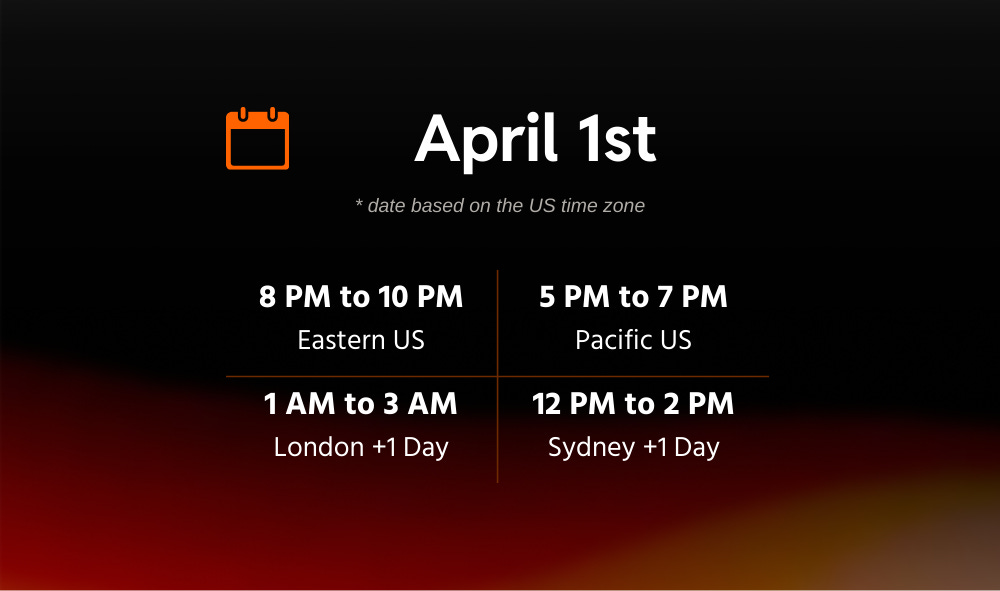
Spots are limited—and the clarity you’ll gain? Game-changing.
Let’s build your portfolio like it’s your next great company!

If you like the newsletter, support us by letting us know what you think (one click); please do that now!
PS...If you're enjoying Managing Tech Millions, please consider referring this edition to a friend.
And whenever you are ready, there three ways I can help you:
Follow me on LinkedIn: Get more insights and real-time updates.
Tune into the Podcast: Dive deeper into wealth strategies and interviews.
Get in Touch: Ready for a bigger move? Let’s talk.

Disclaimer: This newsletter is for informational purposes only and does not constitute financial or career advice. Always consult with qualified professionals before making any decisions based on the information provided.