


👋 Managing Tech Millions by WealthOps 📈 your go-to source for building wealth with tech equity and managing the money that comes with it.
Every Thursday, we'll deliver a concise and powerful lesson on building wealth working for equity compensation or on managing your seven and eight-figure portfolio.


Today, in 5 minutes or less, you’ll learn:
📊 The 3 vetting filters the ultra-wealthy use to evaluate every advisor — regardless of credentials or referrals
🎯 The single most revealing question to ask any advisor (and why most people never think to ask it)
🗺️ Why this isn’t about firing your advisor — it’s about knowing how to choose one with intention

Hey Portfolio CEOs,
The ultra-wealthy don’t pick an advisor. They vet one.
That distinction took me years to understand. Most of us walk into an advisor meeting hoping to be impressed. The ultra-wealthy walk in with a framework — three specific filters they evaluate every advisor against, regardless of pedigree, polish, or who referred them.
When I sat across from Morgan Stanley in 2012 — multiple 7 figures, 90% of my net worth in a single stock, totally unprepared for what I was about to walk into — I had no framework. I had questions, but no structure. And without the structure, I couldn’t tell the difference between a good answer and a confident one.
By the time I left that meeting, I knew something was wrong with what they’d offered me. What I didn’t know was how to evaluate it. That’s the gap most people walk in with. And it’s the gap the ultra-wealthy never have.

Managing Tech Millions is a Weekly Podcast that gives you deep dive conversations into building and growing wealth with myself and other industry experts.
This week, I’m breaking down the biggest myth in wealth management—and why “invest more” is the wrong answer once you cross $1M+ in net worth.
You’re Not an Investor—You’re a Micro Family Office CEO: The moment you accept that identity, your advisors become vendors on your team. You set strategy. They execute.
A Portfolio Isn’t a Business: Scattered accounts aren’t a plan. Structure, team, visibility, and a documented thesis are what turn wealth into a business you actually run.
The Micro Family Office Unlock: The same principles that run $500M Single Family Offices scale down to $1M–$30M. Same rigor, fraction of the cost ($10K–$75K/yr vs. $2M–$3M/yr).
More Investments ≠ Better Outcomes: Without a system, every good pitch becomes a bad decision. Your Investment Thesis is the filter that kills the “junk drawer of financial products.”
The Run Cycle: A quarterly operating rhythm turns wealth management from reactive and anxiety-driven into a structured business operation.
The shift is simple: stop being a money maker. Start being a money manager.

What I Walked Into That Day
I had real questions when I sat down with the Morgan Stanley team. Specific ones.
How do we handle 90% concentration risk? “Sell half. Give it to us.” No unwinding strategy. No tax discussion at all.
How do you coordinate with my CPA on tax optimization? “You should talk to your CPA about that.”
What about entity structure? Should I have a Holding Company? [Confused looks] “We don’t do that.”
Can you walk me through the thinking behind this strategy? “This is just how we do it.”
I knew the answers were thin. What I didn’t know — and wouldn’t understand for years — was that they weren’t bad people. They were operating inside a business model that wasn’t built to solve my problem. And without a framework for vetting them against my actual goals, I had no way to articulate the gap.
The ultra-wealthy never walk in unarmed like that. They have three filters. Let me walk you through them.
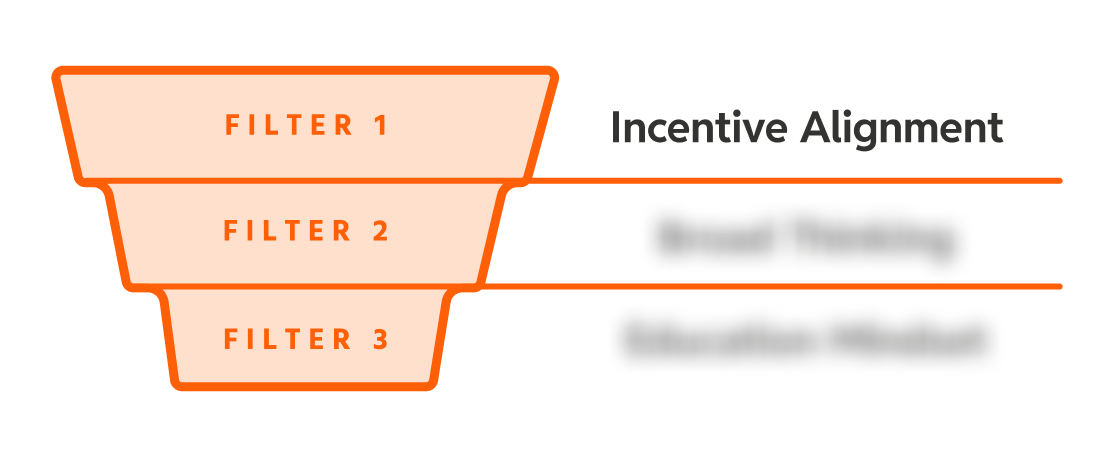
Filter 1: Incentive Alignment
The question that reveals it: “How are you compensated?”
There are four primary compensation models — Fee-Only (flat fee or hourly, no commissions), AUM (% of assets managed), Commission-Based (earns when you buy or sell products), or Hybrid. None of them are inherently good or bad. What matters is whether the incentive structure aligns with what you actually need.
The ultra-wealthy don’t dodge this conversation. They lead with it. Because they know that whatever the advisor gets paid to do is what the advisor will recommend.
The deeper test: “If my best strategy moves assets off your platform — into private deals you can’t manage — how do you feel about that?”
A great answer is open and supportive. A red-flag answer is defensive, redirecting, or “don’t worry about the fees.” That single follow-up tells you whether the advisor sees themselves as a specialist on your team — or as someone who needs your assets to stay on their platform.
This isn’t about catching the advisor in something. It’s about understanding the structure you’re working with. Once you understand the incentives, every recommendation makes sense in context.
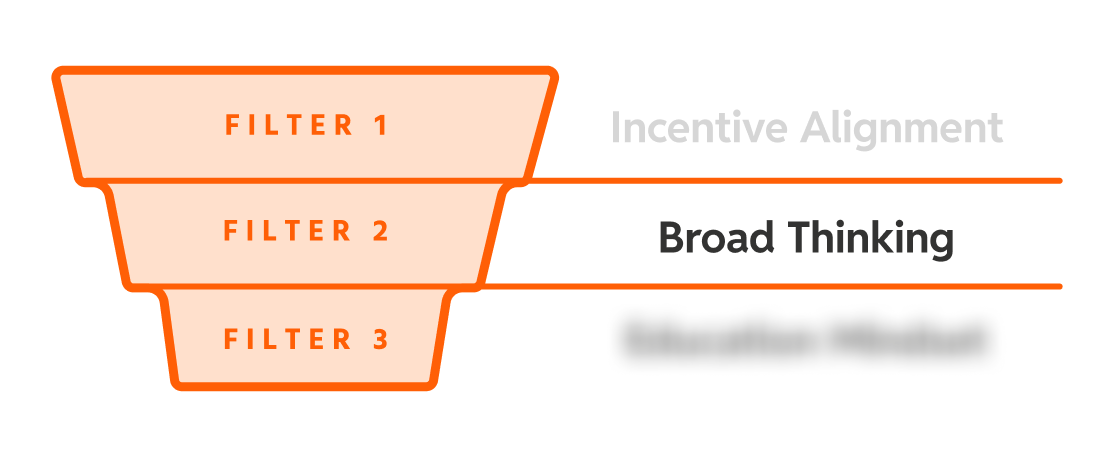
Filter 2: Broad Thinking
The question that reveals it: “What types of investments do you typically recommend — and what do you not offer?”
Every advisor has a scope. Some work only in public markets — stocks, bonds, mutual funds, ETFs. Some have access to private investments — real estate syndications, private equity, alternatives. Some specialize in tax-advantaged structures. Some specialize in nothing at all.
There’s no right answer to this question. There’s only an honest answer. And the honest answer tells you whether they carry the full investment landscape or only half of it.
If they only offer half the landscape, that’s fine — provided you know it. Because then you know to add specialists for the other half. The ultra-wealthy don’t expect any one advisor to do everything. They expect honesty about scope, then build a team that covers the gaps.
The killer follow-up — and the most revealing question in the entire vetting interview:
“What do you personally invest in?”
If they recommend 60/40 to every client while personally investing in private equity and real estate, that’s not risk management. That’s keeping you in the half of the investment landscape they can earn fees on.
A green-flag answer: they invest the way they advise, or they explain honestly why their personal situation differs. A red-flag answer: they dodge, deflect, or say “that’s different.”
You’d be amazed how often that question gets dodged. And how much it tells you when it does.
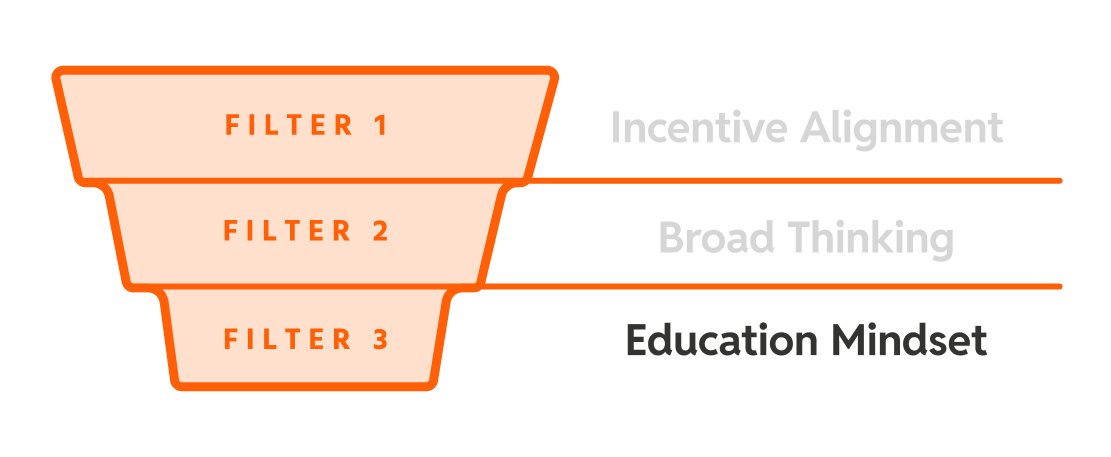
Filter 3: Education Mindset
The question that reveals it: “Will you educate me on the strategies you recommend — or should I expect to fully delegate?”
This is the filter most people skip entirely. And it’s the one that changes everything.
A great advisor welcomes an informed client. They explain the framework. They walk you through the trade-offs. They treat you like a colleague who happens to be hiring them for a specific skill. They get excited when you ask intelligent questions, because it means the relationship can be a real partnership.
A red-flag advisor says some version of: “That’s what you have us for” or “Just trust us.”
Informed consent isn’t optional. The ultra-wealthy know that delegation only works when you understand what you’re delegating. An advisor who keeps you in the dark isn’t protecting you from complexity — they’re protecting their position. Real expertise loves to teach.
When I left that Morgan Stanley meeting, I had asked variations of this question and gotten variations of “this is just how we do it.” No education. No transparency. Just “trust us.” That should have been my first signal — not the bad portfolio recommendation. The unwillingness to teach was the deeper tell.
Why This Framework Matters
Here’s what changes when you walk in with these three filters:
You stop asking “What should I do with my money?” — the client question that puts the advisor in the CEO seat. You start asking “Are you the right specialist for the strategy I’m running?” — the CEO question that puts you in your own seat.
The ultra-wealthy understand something most of us don’t. The advisor relationship isn’t about handing over your wealth. It’s about hiring a specialist to execute one piece of a strategy you already own. The vetting framework exists to make sure you’re hiring the right specialist — not to catch anyone doing anything wrong.
“The CEO doesn’t have to do everything. The CEO has to know what they’re choosing.”
The full vetting framework — every question, every red flag, every green flag, every follow-up — is what we teach inside the WealthOps Accelerator. There’s a reason we made it a structured tool: vetting an advisor without one is exactly what I did in 2012. And it cost me years of figuring out what I should have been able to evaluate in the first meeting.
Key Takeaways
The ultra-wealthy vet advisors against three filters: Incentive Alignment, Broad Thinking, Education Mindset. Not pedigree. Not polish. Not who referred them. The framework is the same regardless of how impressive the prospect looks.
The single most revealing question is “What do you personally invest in?” If they advise one way and invest another, you’ve learned everything you need to know about whose interests come first.
The advisor isn’t the problem. The lack of a framework is. Once you have the vetting structure, every advisor conversation becomes a clear evaluation. Without it, you’re hoping to be impressed.
Your Action This Week
Before your next conversation with any financial professional, ask yourself two questions:
First: Do I have a framework for vetting them — or am I going to walk in hoping to be impressed?
Second: If I had to grade my current advisor right now on Incentive Alignment, Broad Thinking, and Education Mindset — what would the grades be?
If you can’t answer either question, you’re operating without the structure the ultra-wealthy take for granted. The fix isn’t to fire anyone. The fix is to install the framework — and use it the next time you have an advisor conversation.
Let’s keep building.
—Christopher
P.S. The Morgan Stanley team I met in 2012 weren’t bad advisors. They were operating inside a business model that wasn’t designed to solve my problem. That distinction is everything. The vetting framework isn’t about finding villains — it’s about finding the right specialist for the strategy you’re running.
Go Deeper
The architecture this protects: I Discovered How the Ultra-Wealthy Actually Build Portfolios — the three behaviors (income, preservation, growth) that the right advisor helps you execute.
Live workshop: The WealthOps Way — free, 2 hours. See how the vetting framework fits inside the larger family office operating system.
This is education, not advice. Advisor selection should be based on your specific situation and goals.

Join me for The Micro Family Office Blueprint—our free live workshop designed to help you stop guessing and start running your wealth like a business.
You’ll go from scattered to strategic as you craft your own Portfolio Thesis—the foundation of everything that follows.
Spots are limited—and the clarity you’ll gain? Game-changing.
Let’s build your portfolio like it’s your next great company!

If you like the newsletter, support us by letting us know what you think (one click); please do that now!
PS...If you're enjoying Managing Tech Millions, please consider referring this edition to a friend.
And whenever you are ready, there three ways I can help you:
Follow me on LinkedIn: Get more insights and real-time updates.
Watch on YouTube: Dive deeper into wealth strategies and interviews.
Get in Touch: Ready for a bigger move? Let’s talk.

Disclaimer: This newsletter is for informational purposes only and does not constitute financial or career advice. Always consult with qualified professionals before making any decisions based on the information provided.