


👋 Managing Tech Millions by WealthOps 📈 your go-to source for building wealth with tech equity and managing the money that comes with it.
Every week, we'll deliver a concise and powerful lesson on building wealth working for equity compensation or on managing your seven and eight-figure portfolio.


Today, in 5 minutes or less, you’ll learn:
📊 The gap I found between what I was sold and what was actually happening
🎯 Why IRR, exit price, and cash-on-cash all rest on a few assumptions
🗺️ The 60-minute check I now run on every pro forma before I invest

Hey Family Office CEOs,
There’s a saying in real estate: the pro forma always lies.
A pro forma is the set of projections an operator shows you to sell an investment. Rent growth, expenses, what the property sells for at the end, what you’ll earn along the way. It’s the story of how the investment is supposed to go.
I learned what that saying means from operators who were making me money, which is what made the lesson hard.

Managing Tech Millions is a Weekly Podcast that gives you deep dive conversations into building and growing wealth with myself and other industry experts.
This week, I’m breaking down the three filters wealthy families run before an investment gets a single dollar—and why the most important one happens before anyone looks at a number.
Two Different Questions: Most people ask whether an investment will grow their wealth. Wealthy families ask whether it fits what they’re building. That one shift lets them say no to almost everything that crosses their desk.
A Portfolio of Yeses: Before I had a strategy, every pitch felt like it might be the one. I spent evenings and weekends reading decks. Each investment made sense on its own, but none of them worked toward my goals together.
Your Dollars Are the Staff: When you run your wealth like a business, every investment is a hire. Wealthy families don’t start by judging the investment. They judge the fit, because a great investment can still be wrong for you.
The Investment Thesis: The first filter is a short statement of what your portfolio is for, built on a blend of growth, income and capital preservation. Writing mine made it easy to say no to venture capital.
The Open Seat: Every investment gets hired into one team. I explain why a strong candidate can still be a “not now,” and the overstaffing mistake I see most often among people who built their wealth in tech.
Start From No: Due diligence that makes the investment earn the yes. I cover the first question Marco, a family office CIO, asks, and why a fast, clear no is a gift to everyone involved.
What the Filters Gave Back: Time, clarity on where to go deep, less FOMO and a few saved friendships. I also share the one sentence that makes turning down a friend’s deal easy.

I Bought a Math Book
When I got into private equity and real estate in 2016, I made myself one promise. I was going to start small, and I was going to understand how it worked.
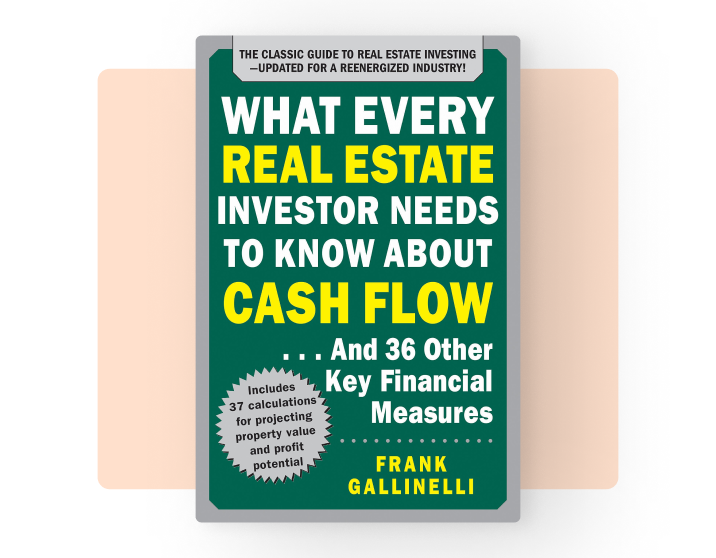
So I went slowly, about $50,000 at a time. And I bought a book called What Every Real Estate Investor Needs to Know About Cash Flow by Frank Gallinelli. It’s a math book, and it’s where I started to understand how these investments actually work. It also changed what I looked at when the quarterly reports came in.
The Reports Didn’t Match the Pitch
Every investment I made came with a pro forma. Then every quarter, a report showed up telling me what actually happened.
I started putting the two side by side. And I saw a difference. Rents weren’t growing as fast as the pro forma said they would.
So I asked a simple question: how did they build the pro forma in the first place?
Then I looked at what the market was actually doing. One operator had assumed rents would grow around 10% a year. The market was doing roughly half that.
The way people sell an investment and the way the investment actually operates can be two different things.
Everything Rests on a Few Assumptions
After that, I started reading every model differently.
The numbers on the front page of a pitch, the IRR, the exit price, the cash-on-cash return, look like results. Each one is calculated from a handful of assumptions underneath:
Rent growth. How fast does income rise each year?
Exit price. What does someone pay for the property at the end?
Interest rate. What does the loan cost when it resets?
Expenses. What does it cost to run the property?

Change one of those, and every number on the front page moves. Assume 10% rent growth instead of 5%, and a mediocre investment can look like a great one.
I also started asking investors with a lot more experience than me what they do. That’s how I got to the method I use today.
The Hard Part: Everyone Was Still Making Money
In 2016, 2017, and 2018, the numbers didn’t add up, and people were still making money anyway. Property values were rising across the board. Real estate had a lot of wind at its back, and that wind covered up a lot of optimistic assumptions.
My investments were paying too.
But I understood that if the market turned, those weren’t going to be sound investments. They were working because of the market.
So as each investment wrapped up and my capital came back, I didn’t reinvest with those operators. I walked away from people who had made me money, because I no longer agreed with how they built their numbers.
Then the tailwind stopped. Rates went up, and by 2022-2023 many operators from that era struggled to exit their properties profitably.
What I Do Now
Today you hear a lot of investors say, “I do my own underwriting.” That’s what I do, and it’s simpler than it sounds.
A lot of the time, it’s a very simple model where I ask, what are my assumptions? Then I compare them to the operator’s and look at the delta.
If the gap is small, good. If it’s big, I want to know where their number came from.
This matters even more now. With AI, anyone can produce a beautiful model in an afternoon, so I spend my time on the assumptions underneath it.
Key Takeaways
A pro forma is a sales document. It shows you how the investment is supposed to go, built on the operator’s assumptions.
The headline numbers are outputs. IRR, exit price, and cash-on-cash all come from a few assumptions. Find them.
A strong market can hide weak assumptions. An investment can pay you for years on tailwinds and still be built on numbers that won’t hold when the market turns.
Your Move This Week
Pick one pro forma. An opportunity you’re looking at right now, or one you already own.
Circle three assumptions:
Rent growth (or revenue growth, if it isn’t real estate)
Exit price
The interest rate when the loan resets
Next to each one, write the market number, and where you found it. Look at what similar properties in that market have actually done, not what anyone projects.
Then write the gap between their number and yours.
If you already own the investment, add one more step: pull your latest quarterly report and compare what actually happened against the pro forma you were sold.
Completion signal: three gaps written down. If any gap is big, that’s the question for your next conversation with the operator.
Held beats pretty.
The operators I walked away from were making me money when I left. I left because I no longer agreed with how they built their numbers.
Let’s keep building.
—Christopher
P.S. Reading a pro forma and vetting an operator is exactly what members are working through together this month during Private Equity Month inside the Micro Family Office Accelerator. If you’re not a member yet, start with The WealthOps Way.
👉 Start here: The WealthOps Way
Go Deeper
🎯 Start here if you’re new — The WealthOps Way Free, 2-hour live workshop.
The structured build path: Micro Family Office Accelerator — Year 1 of the WealthOps membership.
Recent arc:
3 Things I Learned From Years in Private Equity — why, where to start, and vetting the operator (confirm slug)
One Year In: What 246 Families Actually Built — the member wins (confirm slug)
By 2030 AI Runs Your Wealth. Here’s the Trap. — AI as your operations manager, not your decision maker
Today: why I walked away from operators who were making me money
New here?
I’m Christopher. I built my Family Office after my 2012 IPO, after googling “how to build a family office” and hitting the $100M wall the industry has quietly agreed on. Now I lead a community of more than 240 practitioners at WealthOps, and we’re building Eterna, the AI platform behind our approach. If this is your first issue, welcome. The best place to start is The WealthOps Way (wealthops.io/go). Free workshop, full rulebook, no pitch.
This is education, not investment advice. Private investments are generally limited to accredited investors, are illiquid, and can lose money. Do your own due diligence with your advisors.

Join me for The WealthOps Way—our free live workshop designed to help you stop guessing and start running your wealth like a business.
You’ll go from scattered to strategic as you craft your own Portfolio Thesis—the foundation of everything that follows.
Spots are limited—and the clarity you’ll gain? Game-changing.
Let’s build your portfolio like it’s your next great company!

If you like the newsletter, support us by letting us know what you think (one click); please do that now!
PS...If you're enjoying Managing Tech Millions, please consider referring this edition to a friend.
If this was useful, tap the ❤️ button. It tells Substack to show more writing like this.

And whenever you are ready, there three ways I can help you:
Follow me on LinkedIn: Get more insights and real-time updates.
Watch on YouTube: Dive deeper into wealth strategies and interviews.
Get in Touch: Ready for a bigger move? Let’s talk.

Disclaimer: This newsletter is for informational purposes only and does not constitute financial or career advice. Always consult with qualified professionals before making any decisions based on the information provided.