


👋 Managing Tech Millions by WealthOps 📈 your go-to source for building wealth with tech equity and managing the money that comes with it.
Every week, we'll deliver a concise and powerful lesson on building wealth working for equity compensation or on managing your seven and eight-figure portfolio.


Today, in 5 minutes or less, you’ll learn:
📊 The one principle members say every week — the one that predicts who actually moves
🧭 What a Family Office quarterly cadence really is — top-down thinking, then shared with the broader team
👨👩👧 The one conversation to have with your family this weekend

Hey Family Office CEOs,
Six months into 2026. Around 170 wealth builders inside our community of practitioners now — running their family offices alongside each other, in front of each other. More joining every month.
Six months of shared practice. Real Family Office CEOs sitting down to build and operate their family offices — not alone, not in theory, but in a room with other Family Office CEOs doing the same work at the same time. Everyone at a slightly different stage. Everyone watching everyone else’s work. Everyone getting sharper from the honesty in the room.
I get asked all the time what the leading indicator is. “Christopher, what should I look at? What’s the sign someone’s actually going to make a Family Office work?”
That question made me pause. There are a lot of components to a family office - the entity structure, the investment thesis, the family alignment, the Legacy Statement, the expert partner team.
But six months of practicing in community with these builders has clarified it enough that I can say it straight:
The one thing that predicts who’s actually moving — and who’s still just reading about it — is whether they’ve committed to standing up and operating a real Family Office Cadence.
Not strategy. Not entity structure. Not the perfect allocation. Rhythm.
That’s the whole thing.

Managing Tech Millions is a Weekly Podcast that gives you deep dive conversations into building and growing wealth with myself and other industry experts.
This week, I’m sitting down with Marco Quevedo—CIO of a nine-figure family office—and we’re mapping how the Architect phase works the same way billion-dollar family offices operate.
Purpose Before Portfolio: Family offices don’t start with investments—they start with “what is this wealth for?” Goals before thesis, thesis before allocation.
The Power of No: The best investors aren’t great at saying yes—they say no fast and without guilt. “It doesn’t fit our thesis” is a complete sentence.
Three Buckets: How to split capital across preservation, income, and growth—and why most people over-allocate to growth and eat their own compounding.
Governance That Scales: Tiered decision authority, concentration limits, and who actually gets a vote—built the same way you’d run a business.
The Cadence That Keeps It Alive: Quarterly portfolio reviews, annual thesis check-ins, and the post-mortems that build your edge one percent at a time.
Sit in the Empty Seat: Marco’s closing advice for anyone starting their MiFO—stop being a passenger in your own financial life.

Held Beats Pretty
There’s one phrase members say to each other inside the community — one principle that predicts more than any other:
Held beats pretty.
The conversation doesn’t have to be perfect. The family doesn’t have to be aligned before you start. You don’t have to have every answer ready. A messy meeting you actually hold beats a flawless one you skip.
Skip it and the ball stops — the family stays in the dark on what you’re building, the kids never see the business, your spouse stays in a partner-of-a-partner role instead of a co-CEO one. Hold it and the ball moves forward. That’s the whole game.
The members who are moving hold their meetings. That’s it. That’s the pattern.
The Quarterly Cadence — Where You Think Top-Down
Every quarter, the Family Office CEO steps back and thinks strategically. Top-down. Big picture. Not the daily operations. The direction.
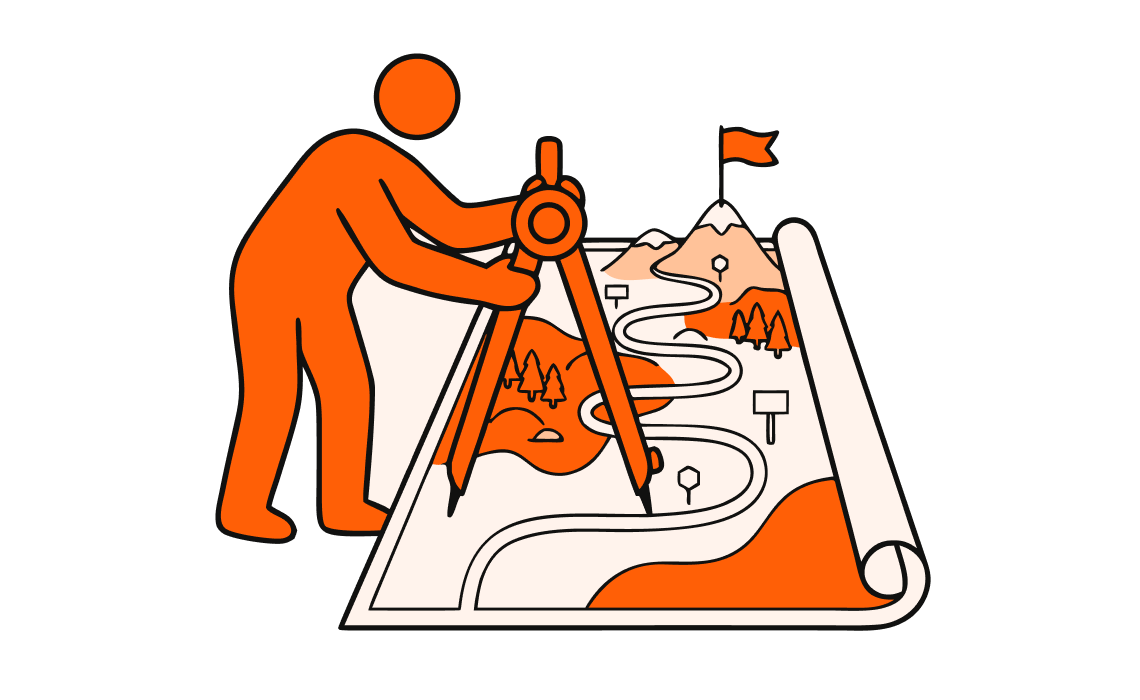
Two questions on the table:
Is the family aligned with our Mission? What are we building toward? What does the next 12 months need to look like for the family to move forward — as people, as stewards, as the people this wealth is for?
Where is the business going? How is the portfolio performing? What’s the tax strategy for the year? What decisions are we making about entities, allocations, the next investment thesis, the Expert Partner Team?
That’s the strategic work of the quarter. Not tasks. Direction.
But here’s the piece most people miss: the quarterly cadence isn’t the CEO thinking in isolation. It’s the CEO thinking strategically — and then sharing that direction with the broader team.
Your Expert Partner Team gets looped in — the CPA, the attorney, the bookkeeper, the financial advisor. Everyone with a role in what you’re building needs to know where you’re going.
And your family gets looped in too. That’s the Family Office meeting.
What a Family Office Meeting Actually Is
The Family Office meeting is the piece of the quarterly cadence where the CEO brings the family into the direction he’s set.
Most people confuse the term with what the CEO does alone during the week — reviewing cash, closing the books, answering the CPA. That’s the operational work of running the business. It’s important. It’s not a Family Office meeting.
A Family Office meeting is exactly what its name says.
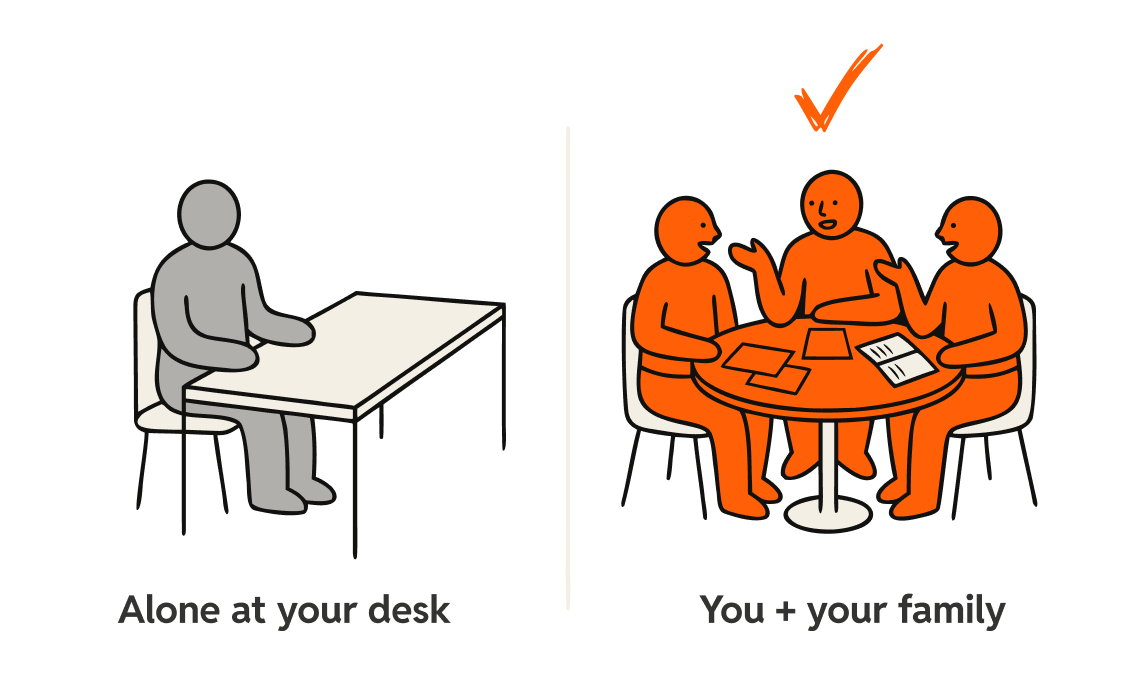
It’s you and your family, sitting down together, talking about the business of your family’s wealth.
Not you alone at your desk. Not you with your advisor. You with the people you’re actually building this for.
It could look like:
A quarterly conversation over dinner with your spouse — “Here’s where we are. Here’s what we’re deciding this quarter. Here’s what I want you thinking about.”
A holiday weekend where you walk your kids through the Legacy Statement and the family vision
A monthly check-in with adult children on the businesses, the investments, the values you’re building toward
A drive back from soccer practice where a nine-year-old asks a question and you actually answer it like they’re part of what you’re building
The specifics change based on where your family is. Some conversations are formal. Most aren’t.
What matters is that the family is in the room — actual or metaphorical — talking about the business of the wealth.
That’s why it’s called a Family Office. The office is the structure. The family is the point.
The Heartbeat — Regular, Not Random
Here’s what makes this actually work over time: it can’t be random.
The reason it’s called a cadence is that it operates like a heartbeat. Held on a rhythm. Not once, when it feels convenient. Every quarter — or whatever cadence you set — without exception, whether it’s messy or not.
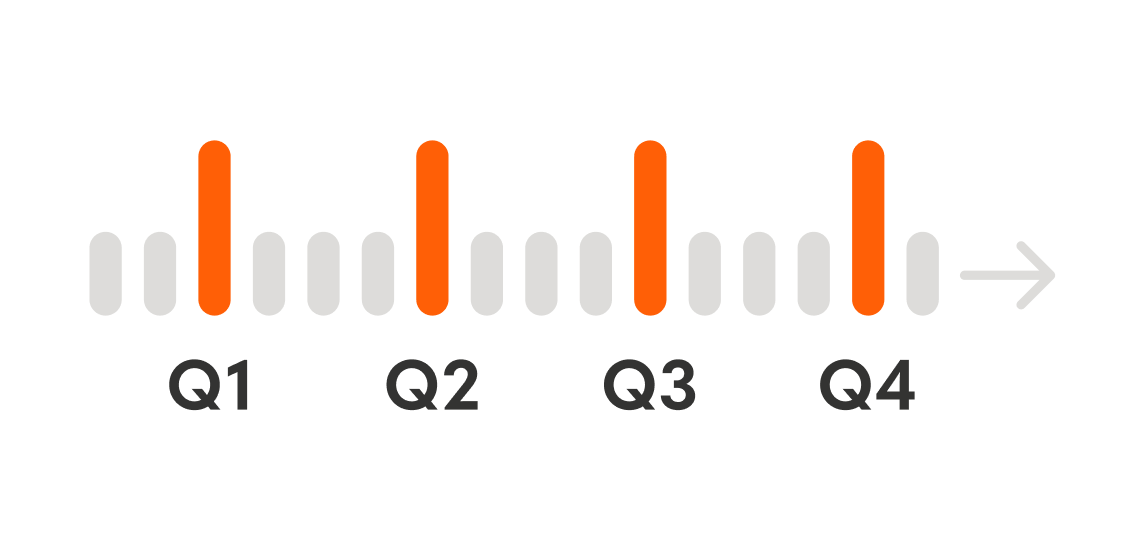
The mechanics matter more than most people realize:
You hold the meeting on a regular cadence
You log that it happened
You log what was decided
You keep the documentation so it’s findable later
Why the tracking matters — it’s not just for you. Over time, the people around you gain three things from the pattern:
Clarity — about the vision and mission of the family office. What you’re actually building. Where it’s going.
Visibility — into how it’s being run. What decisions get made. What happened this quarter.
Understanding of the details — where the documentation lives, what’s in the vault, how to find what they need if something happens to you.
That’s not soft. That’s the actual output of the CEO’s work — a family and a team who understand the business of the family’s wealth well enough to be part of it.
This is exactly why we’re building Eterna — the AI platform behind WealthOps. To make the heartbeat visible and trackable — to log the meetings, capture the decisions, hold the documentation — because CEO-level work needs a system running alongside it. Otherwise the pattern breaks the moment things get busy. And when the pattern breaks, the clarity for the family and the team breaks with it.
The exact rhythm can differ. Some families do quarterly. Some layer in a monthly conversation. Some run an annual family retreat on top of it. What can’t differ is that it operates like a heartbeat — regular, logged, tracked, running whether you feel like it or not.
That’s what turns “I had a good conversation with my daughter” into “my daughter understands what our family office is for.”
What a Member’s Daughter Told the Room
There’s a member in the community who started standing up his family office earlier this year. Same posture I’ve been describing — he built a rhythm before he built anything fancy.
He got into a Cadence quickly — weekly touches, a monthly review, quarterly reset. Nothing exotic.
What happened next surprised him: he started bringing his kids into the conversation. Not as an assignment. Because he was doing the work of running the family office in a way they could actually see.
A few months later, his daughter joined one of our community sessions.
She said something that stopped the room: “I finally have clarity about what the family office is for.”
She and her brother are excited to participate now. Not because they were pitched on it. Because they can see how their dad actually runs and operates the business of the family — the same way he’s run and operated every other business he’s led. The Cadence deepened the family relationship. It didn’t just organize a portfolio — it gave the next generation a way in.
That’s the part most people miss when they imagine what a Family Office Cadence actually produces. It’s not just cleaner books and better reviews. It’s the family understanding the business — operating as a business together, as a family. Which is what makes what you build actually outlast you.
Your First Conversation This Weekend
Almost every member says a version of this: “But my family isn’t ready for this.”
Here’s what actually happens: the family is more ready than you think — because your spouse and your kids have already noticed you’re operating differently. They see the calendar time you’re blocking. They see the seriousness. What they don’t have yet is access to what you’re doing. The first meeting is just letting them in.
You don’t have to be polished. You don’t have to have every answer. You just have to hold the conversation.
Pick one person in your family. Your spouse. Your oldest kid. Whoever’s ready.
Sit down for 20 minutes. No agenda, no slides.
Tell them what you’re building — the family’s wealth, the way you’re operating it, where you want it to go. Ask what they think. Answer whatever question they ask honestly, even if the honest answer is “I don’t know yet.”
Then write it down. What you talked about. What got decided. What the next conversation needs to cover.
That’s it. The first Family Office meeting — logged and dated. Held. Not pretty.
Then hold the next one on the cadence you set. Monthly. Quarterly. Whatever fits your family. The rhythm will find itself. The heartbeat will start.
Held beats pretty.
That’s the one principle every Family Office CEO holds. It’s the whole thing. The rest is downstream.
Whatever you’ve already built or led, you already have the harder half of what’s needed to run this. What’s left is holding the conversation — with the people you’re actually building it for. That’s what turns a wealth builder into the CEO of a Family Office.
Let’s keep building.
—Christopher
P.S. If reading this made you realize you don’t have a real Cadence yet — the on-ramp is The WealthOps Way. Two free hours where I walk through the foundation, including what a Family Office Cadence looks like from the inside.
👉 Start here: The WealthOps Way
Go Deeper
🎯 Start here if you’re new — The WealthOps Way Free, 2-hour live workshop. The foundation: what a Micro Family Office is, the two portfolio models, the 7 Components, and your own Legacy Statement.
Recent arc:
I’m Training 170 People to Be Family Office CEOs — how the community of practitioners is built
My 2019 Sabbatical Made 2022 Work — how I test-drove my own MiFO before committing
Today: the one habit inside every member actually moving
New here?
I’m Christopher. I built my Family Office after my 2012 IPO, spent over a decade studying how it actually works, took a sabbatical in 2019 to test-drive it, went back for more equity in 2020, and walked away from the workforce in 2022. I’ve been running my own MiFO as the CEO for five years, and now I lead the community of practitioners at WealthOps. If this is your first issue — welcome. The best place to start is The WealthOps Way (wealthops.io/go). Free workshop, full framework, no pitch.
This is education, not advice. Learn the systems, don’t copy blindly.

Join me for The WealthOps Way—our free live workshop designed to help you stop guessing and start running your wealth like a business.
You’ll go from scattered to strategic as you craft your own Portfolio Thesis—the foundation of everything that follows.
Spots are limited—and the clarity you’ll gain? Game-changing.
Let’s build your portfolio like it’s your next great company!

If you like the newsletter, support us by letting us know what you think (one click); please do that now!
PS...If you're enjoying Managing Tech Millions, please consider referring this edition to a friend.
If this was useful, tap the ❤️ button. It tells Substack to show more writing like this.
And whenever you are ready, there three ways I can help you:
Follow me on LinkedIn: Get more insights and real-time updates.
Watch on YouTube: Dive deeper into wealth strategies and interviews.
Get in Touch: Ready for a bigger move? Let’s talk.

Disclaimer: This newsletter is for informational purposes only and does not constitute financial or career advice. Always consult with qualified professionals before making any decisions based on the information provided.