

👋 Managing Tech Millions 📈 your go-to source for building wealth with tech equity and managing the money that comes with it.
Every Thursday, we'll deliver a concise and powerful lesson on building wealth working for equity compensation or on managing your seven and eight-figure portfolio.


Today, in 5 minutes or less, you’ll learn:
🏜️ Why $1M-$30M is the ignored middle—too small for custom solutions, too large for DIY
💸 What this gap actually costs you (spoiler: it’s not just money)
🗺️ The exact moment I realized traditional advice would never work for my situation

Hey Portfolio CEOs,
Can you relate? I’m sure you’ve been there.
You go through an IPO. Or your company gets acquired. Or you hit a major equity event. The next day, your inbox fills up with messages from Morgan Stanley, Goldman Sachs, the big private banking teams.
“We’d love to talk about wealth management.”
You’ve heard the whispers. Family offices. Private equity. Income investments. Strategies the ultra-wealthy use. You think: Finally. This is the door that opens when you make real money.
In 2012, I took that meeting with Morgan Stanley.
Post-IPO. Multiple 7 figures. 90% concentrated in a single stock. I’d been managing my own stock investments for a decade, but this felt different. I needed professional help.
A senior advisor and a junior advisor showed up. Polished. Confident. They asked about my goals. Nodded knowingly. Then slid a portfolio proposal across the table.
60/40 stocks and bonds.
I stared at it. I’d been asking about concentration risk, tax coordination, entity structure, income strategies. And this was the answer?
The same generic allocation they’d give anyone with a pulse and a checkbook.
I realized something crushing: I was probably already giving myself better performance than what they were offering. They weren’t opening any doors. They were offering fast food wealth management in a fancy building.
That’s when I knew: I was in the service desert. And I was completely on my own.

Managing Tech Millions is a Weekly Podcast that gives you deep dive conversations into building and growing wealth with myself and other industry experts.
This week, I’m breaking down the real difference between the Family Bank and the Micro Family Office—and why confusing the two can cost you years of progress.
Tool vs. System: Why Infinite Banking is a product strategy—not a wealth management framework
What the Family Bank Actually Does: When it makes sense—and when it doesn’t
Behind the Scenes of Real Wealth: What a full operating system for money really looks like
Foundation First, Tools Second: Why stacking products without infrastructure creates friction
Build to Last: How wealthy families design systems that keep working—even without them

What I Expected vs. What I Got
I walked into that meeting expecting the doors to open.
You make millions, the whispers said, and suddenly you get access to the strategies the ultra-wealthy use. Family office resources. Private equity deals. Income strategies that generate 8-10% cash flow.
What I got: The same 60/40 portfolio they’d give someone with $500K.
I started asking questions:
Me: “90% of my net worth is in one stock. How do we handle concentration risk?” Them: “When you come out of your blackout period, sell half. Give it to us.” Me: “What about unwinding it slowly? Offsetting taxes?” Them: “It could drop in a day. You want to sell half. Turn it over to us.”
Fear-based selling. No unwinding strategy. And shockingly—no tax discussion at all.
Me: “Okay, but what’s your strategy for managing this? How does this usually work?” Them: “This is the way you do it.” Me: “But why? Can you walk me through the thinking?” Them: “This is just how we do it.”
No education. No transparency. Just “trust us.”
Me: “How do you coordinate with my CPA on tax optimization?” Them: “You should talk to your CPA about that.” Me: “But shouldn’t you work together?” Them: [Blank stares]
No coordination. They managed portfolios. That’s it.
Me: “What about entity structure? Should I have a Holding Company?” Them: [Confused looks] “We don’t do that.”
That’s when it hit me: They didn’t want to educate me. They wanted to be in the CEO seat. Their business model was clear—client acquisition, then standardized investments.
And if I understood their standardization model, couldn’t I just do it myself?
The meeting changed everything. Not because I found the answer—but because I realized there wasn’t one. Not for people at my level.
The Gap Nobody Talks About
Here’s what I learned: The wealth management industry has a massive gap.
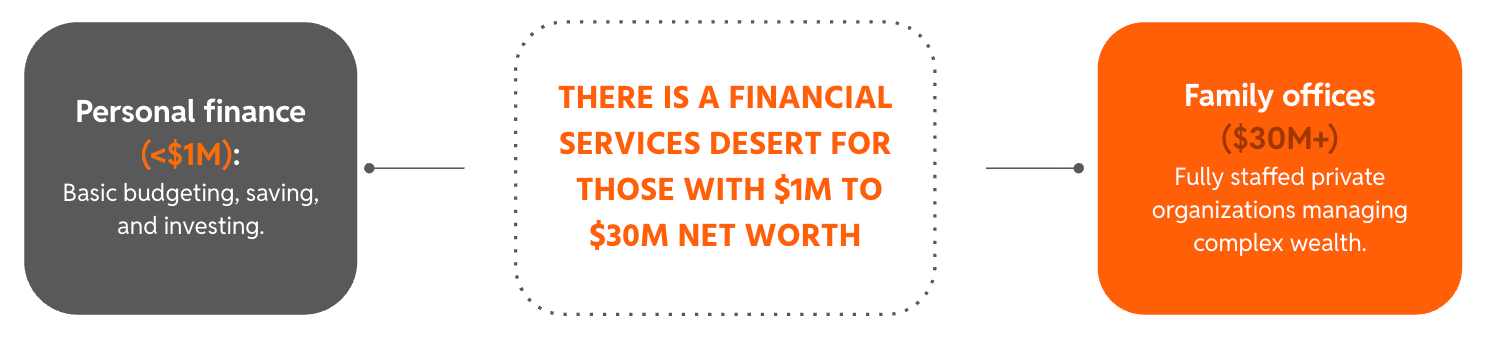
Under $1M: DIY territory. Roboadvisors, index funds, personal finance blogs. Tools exist. They’re designed for you.
Over $30M: Custom territory. Multi-family offices, single-family offices, concierge service. They’ll coordinate everything—your CPA, your attorney, your estate planner. White-glove execution.
$1M-$30M: The ignored middle. The service desert.
You’re too small for the ultra-wealthy solutions. The minimum for most family offices is $30M-$50M. Some won’t talk to you under $100M.
But you’re too large for DIY. A $5M portfolio isn’t something you can “figure out on weekends.” The stakes are too high. The complexity is too great.
Traditional advisors fill the gap, right?
No. They offer the same thing to everyone: AUM-based portfolios with generic allocation models. They don’t coordinate your taxes. They don’t help with entity structure. They don’t think strategically.
They manage portfolios. They don’t build wealth businesses.
What the Service Desert Costs You
This gap isn’t just inconvenient. It’s expensive.
You’re leaving money on the table because:
No tax coordination. Your CPA files your return. Your advisor manages your portfolio. Neither talks to the other. You’re missing plays worth $10K-$50K+ annually.
No entity strategy. You’re operating as an individual when you should have a Holding Company and Management Company. You’re paying more in taxes and exposing yourself to unnecessary liability.
No income architecture. Your advisor puts you in growth funds when you need cash flow. They’re optimizing for AUM growth (their revenue model), not your lifestyle goals.
No operational systems. You’re managing this like a hobby. No bookkeeping. No compliance calendar. No dashboard. You’re reactive instead of systematic.
But the biggest cost isn’t financial. It’s psychological.
You feel like you should have this figured out by now. You made the money. Why is managing it so hard?
You’re paying an advisor 1% annually and still feel like you’re on your own.
You can’t find anyone who understands your situation. Everyone either treats you like you’re not wealthy enough or assumes you have unlimited resources.
You’re stuck between two worlds. And nobody’s built a bridge.
What I Did About It
That Morgan Stanley meeting was 2012. I spent the next four years trying to figure this out.
I Googled “how to build a family office.” Every result said “$100M minimum.” Dead end.
I talked to friends. Most were in the same boat—stuck between DIY and custom solutions they couldn’t afford.
I hired fee-only advisors for planning. Better than AUM advisors, but they still couldn’t coordinate everything.
Then I had a breakthrough conversation with a friend who’d become CIO of family offices. He explained how the ultra-wealthy structure their wealth—not as portfolios, but as businesses.
They have:
A clear vision (legacy statement driving all decisions)
Business structure (entities for tax efficiency and liability protection)
Operating systems (bookkeeping, compliance calendars, dashboards)
Coordinated teams (CPA, CTP, attorney working together)
Executive governance (decision frameworks, not ad hoc choices)
I realized: I could build this myself. Not at $100M scale—but at $3M-$5M scale.
I just needed to scale it down. Keep what mattered. Remove what didn’t.
That became the Micro Family Office methodology.
The Bridge Across the Desert
Here’s what I learned building my MiFO:
The ultra-wealthy aren’t smarter than you. They’re not financial wizards. They just have different systems and think about the problem holistically.
You don’t need $100M to run a family office. You need the right systems scaled to your asset level. A $5M portfolio needs different infrastructure than a $100M portfolio—but the same components exist.
The service desert exists because nobody’s built for the middle. Advisors want AUM. Family offices want scale. Nobody’s focused on $1M-$30M because the unit economics don’t work for traditional models.
But you can build it yourself. You already know how to run operations. You’ve managed teams, built systems, optimized processes. Wealth management is just another operational challenge.
The Micro Family Office is the bridge.
It’s what I built for myself in 2016. It’s what I’ve been running ever since. It’s what transformed my scattered investments into a business that generates $180K+ in annual income and requires a couple hours per week to maintain.
It’s not theoretical. It’s operational.
Your Turn
If you’re reading this and thinking “this is me”—you’re not alone.
Tens of thousands of tech professionals, executives, and entrepreneurs are in the service desert right now. Making great money. Building wealth. But managing it like a side hustle because nobody’s built a real solution for your asset level.
You have three options:
Keep doing what you’re doing. Pay an advisor 1%, get generic advice, feel like you’re on your own. Stay in the desert.
Try to DIY everything. Spend your weekends Googling tax strategies and entity structures. Hope you don’t make expensive mistakes. Burn out.
Build your own Micro Family Office. Learn the systems. Implement the infrastructure. Run your wealth like the business it is.
Option 3 is what I chose. It’s what I teach inside WealthOps.
What’s Next
This week, I’m publishing a deep dive on the service desert—why it exists, what it costs you, and why traditional advisors can’t solve it.
[Read the full breakdown: The Service Desert: Why $1-30M Gets Ignored] ← Link to blog post
But if you’re ready to stop waiting for someone to build a bridge and start building your own—that’s what the MiFO Accelerator is for.
We teach you to build the same 7 components the ultra-wealthy use. Scaled to your asset level. Designed for your situation.
Builder path ($1M-$5M). Operator path ($5M-$15M). Scaler path ($15M-$30M).
No generic advice. No one-size-fits-all portfolios. No hoping your CPA and advisor figure it out.
You learn. You build. You run it.
—Christopher
P.S. That Morgan Stanley meeting happened 14 years ago. I spent years frustrated in the service desert before I realized nobody was coming to save me. Building my MiFO was the best decision I ever made. Not because it was easy—but because it worked.
Go Deeper
Ready to build your MiFO? Join the WealthOps Accelerator and learn the complete system.
Subscribe to the newsletter: Get frameworks, systems, and practitioner insights every week → Managing Tech Millions
This is education, not advice. Learn the systems, don’t copy blindly.

Join me for The WealthOps Way—our free live masterclass designed to help you stop guessing and start running your wealth like a business.
You’ll go from scattered to strategic as you craft your own Portfolio Thesis—the foundation of everything that follows.
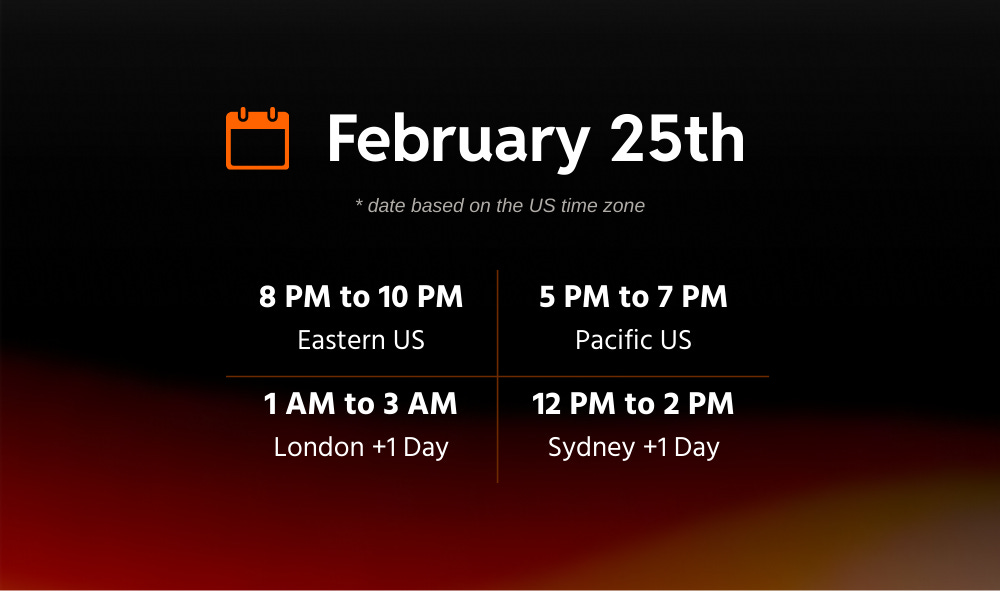
Spots are limited—and the clarity you’ll gain? Game-changing.
Let’s build your portfolio like it’s your next great company!

If you like the newsletter, support us by letting us know what you think (one click); please do that now!
PS...If you're enjoying Managing Tech Millions, please consider referring this edition to a friend.
And whenever you are ready, there three ways I can help you:
Follow me on LinkedIn: Get more insights and real-time updates.
Tune into the Podcast: Dive deeper into wealth strategies and interviews.
Get in Touch: Ready for a bigger move? Let’s talk.

Disclaimer: This newsletter is for informational purposes only and does not constitute financial or career advice. Always consult with qualified professionals before making any decisions based on the information provided.