


👋 Managing Tech Millions by WealthOps 📈 your go-to source for building wealth with tech equity and managing the money that comes with it.
Every week, we'll deliver a concise and powerful lesson on building wealth working for equity compensation or on managing your seven and eight-figure portfolio.


Today, in 4 minutes or less, you’ll learn:
📍 The exact process I’m running (6 tax teams in — same questions, my strategies on the table)
🧭 The one insight that surprised me — the pattern that separates real partners from expensive vendors
🗺️ The one Expert Partner audit to run this weekend on someone already on your team

Hey Family Office CEOs,
Writing this from Madrid. Week 2 in. And I’m deep into one of the most complicated pieces of moving a Family Office to another country:
I’m interviewing a new tax team.
Here’s what I want to show you today — because it’s the pattern I’m noticing over and over as I run this process from a different continent:
The fundamentals of building a Family Office are universal. Learn them right, they travel with you.
I’m using the exact same framework to hire a Spanish tax team as I use in Texas. The tax code is different. The professional culture is different. The fee structures are different. What’s identical is the framework for picking the right partner. And that’s the thing most people don’t realize until they have to run the process somewhere unfamiliar — the framework was portable the whole time.

Managing Tech Millions is a Weekly Podcast that gives you deep dive conversations into building and growing wealth with myself and other industry experts.
This week, I’m talking about what happens to your wealth after you’re gone—and why most first-generation portfolios don’t survive the handoff.
You’re the Single Point of Failure: The strategy, the reasoning, the relationships all live in your head, and none of it is written down anywhere.
Governance Beats Guesswork: Three questions do the work: who has authority to decide, how decisions get made, and what the rules are when you’re not there.
Raise an Operator, Not an Heir: An heir receives. An operator runs. Somebody should be learning to run this while you’re still here to teach them.
Write the Philosophy Down: Your Legacy Statement and Investment Thesis make your judgment inheritable, so your family gets the why and not only the holdings.
Start Smaller Than You Think: The first honest conversation with your spouse about where everything is counts. No boardroom, no hundred million dollars required.

Why Tax Is the Hardest Hire
Tax isn’t like the other partner hires. Bookkeeping is technical but comparable across professionals. Insurance is product-driven with clear structures. Even attorneys operate within recognizable frameworks.
Tax is different because a great tax strategist is genuinely rare — in any country. Most tax professionals are compliance-focused. They file. They handle deadlines. They keep you legal.

A real tax strategist — the one who works with your Family Office to structure decisions before you make them, not clean up after — is a different animal. That kind of pro is hard to find in the US. And it’s harder to find one in a new jurisdiction where you don’t have a network, you don’t speak the professional shorthand, and you can’t just call a peer for a referral.
So how do you do it? You run the same framework you’d run anywhere.
What I’m Actually Doing (Same in Spain, Same in Texas)
Here’s my practice in real time — the framework I’d run in the US, running in Madrid:
I’ve interviewed about 6 tax teams so far. Not one. Not two. Six. Each one gets a slice of the market. Different sophistication ceilings. Different approaches. Different views on the exact same situation.
I ask every one of them the same questions — verbatim, structured, in the same order. Two reasons: (1) I get consensus data on what I’m actually facing, and (2) I get to compare how each team answers the same question, which tells me who I’d actually want to work with.
I put my proposed strategies on the table and ask them to weigh in. This is the part most people skip. I don’t just ask “what would you do?” — I show them the moves I’m considering and ask them to challenge them. Their answers reveal two things at once: whether my strategy holds up under professional scrutiny, and whether the practitioner has the sophistication to actually challenge me instead of nodding along.
Before every interview I re-read my goals — the Legacy Statement, the $175K income requirement from last week, the specific structures I need for the year in Spain. When you’re clear on your goals going in, you can filter fast. When you’re not, every candidate sounds equally reasonable and you end up hiring on chemistry.
That’s the process. Six interviews. Same questions. Strategies on the table. Goals in hand. Same discipline in Spain as in Texas.
The Insight That Surprised Me
Six interviews in, one pattern has become undeniable — and it’s the thing I wish someone had told me when I hired my first CPA a decade ago:
The best practitioners of tax, law, and finance are the ones who educate you.
Not the ones who protect their expertise. Not the ones who keep you in the dark so you stay dependent on them. The best ones open the book. They walk you through their reasoning. They show you what they’re weighing. They tell you why they’d recommend one path over another, not just what they’d recommend.
They do this because they’ve learned something the mediocre ones haven’t: a better-educated client gets a better result over the long term. A client who understands why a decision is being made can support it, extend it, and evolve it as the situation changes. A client kept in the dark can only follow — and eventually walks away when the trust runs out.
This is the tell I now use to separate real partners from expensive vendors: do they want me smarter, or do they want me dependent?
The ones who want me smarter are the ones I hire. Every time.
What’s Underneath the Practice
Every question I’m asking a Spanish tax candidate this week is a version of the same three tests I teach in the community — the tests every advisor must pass, in any country:
Ability — Do they have the technical ceiling to handle the sophistication of my situation, and grow with me?
Alignment — Is their incentive structure pointed at my outcome, or at something else?
Accountability — Are they willing to be reviewed, measured, and renewed — or replaced — each year?
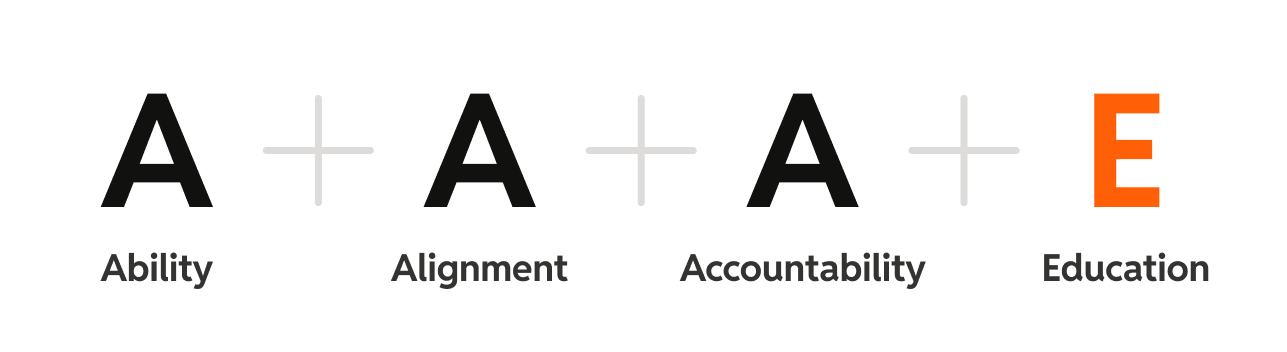
Add the fourth test I’ve now added after this experience:
Education — When I ask them to walk me through their reasoning, do they open the book? Or do they keep it closed?
Language changes. Currency changes. Tax code changes. The four tests don’t.
That’s what makes a Family Office actually portable. The system is thinking discipline, not local rolodex. You can rebuild the team anywhere — as long as you have the framework for how you pick.
What’s Underneath the Moves
Underneath every one of those three moves is the same test I run on every Expert Partner — the one I teach every member in the community:
Three questions. Every time. Every hire.
Ability — Do they have the technical ceiling to handle the sophistication of my situation, and grow with me?
Alignment — Is their incentive structure pointed at my outcome, or at something else?
Accountability — Are they willing to be reviewed, measured, and renewed — or replaced — each year?
Every question I’m asking a Spanish tax candidate this week is a version of one of those three. Language changes. Currency changes. The three questions don’t.
That’s what makes a Family Office actually portable. The system is thinking discipline, not local rolodex. You can rebuild the local team anywhere — as long as you already have the framework for how you pick.
Your One Audit This Weekend
Don’t wait until you’re moving to Madrid to run this. Pick ONE person already on your Expert Partner Team. Your CPA. Your bookkeeper. Your attorney. Your insurance broker. Your financial advisor.
Sit down for 15 minutes and ask four questions:
Ability — Is their sophistication ceiling still one stage above where I am? Or have I grown past them?
Alignment — Is how they get paid still aligned with the outcome I actually want?
Accountability — When was the last time I ran an honest review on this relationship? Would they welcome one?
Education — When I ask them to walk me through their reasoning, do they open the book? Or do they keep it closed?
Write the answers down. If any of the four is a “no” — that’s the partner conversation to have next quarter. Not necessarily to fire. Sometimes to renegotiate. Sometimes to level up. But always: to raise the standard.
That’s the discipline that separates a Family Office that scales from one that stagnates. The framework is universal. The willingness to run it on your existing team is where the real work happens.
Held beats pretty.
Same principle as always. The audit you actually do — even the messy first-pass version — beats the perfect one you never run. Do it on one partner this weekend. That’s the move.
I’ll be running mine on my new Spanish tax team in about two weeks, once I have three real interviews to compare. Same three questions. New country. That’s the whole game.
Let’s keep building.
—Christopher
P.S. The framework I’m running above — how to hire, vet, and manage your Expert Partner Team — is the core of Section 9 of the Micro Family Office Accelerator. If reading this made you want the full framework (the Three A’s, the Sophistication Ceiling Test, the Partner Questionnaire), that’s where it lives. Two free hours in The WealthOps Way is the on-ramp.
👉 Start here: The WealthOps Way
Go Deeper
🎯 Start here if you’re new — The WealthOps Way Free, 2-hour live workshop. The foundation for a Family Office you can run from anywhere.
The structured build path: Micro Family Office Accelerator — Year 1 of the WealthOps membership. Where close to 200 members are practicing this right now.
Recent arc:
I Moved to Spain. My Family Office Came With Me. — the system that travels (2026 record: 5.91% CTR)
The $175K Number That Rewrote My Portfolio — the income engine
My First Legacy Statement Was 11 Words — the sentence that anchors everything
Today: the framework travels with you
New here?
I’m Christopher. I built my Family Office after my 2012 IPO, moved to Madrid with my family this summer to run it from Spain for a year, and now lead a community of close to 200 practitioners at WealthOps. If this is your first issue — welcome. The best place to start is The WealthOps Way (wealthops.io/go). Free workshop, full framework, no pitch.
This is education, not advice. Learn the systems, don’t copy blindly.

Join me for The WealthOps Way—our free live workshop designed to help you stop guessing and start running your wealth like a business.
You’ll go from scattered to strategic as you craft your own Portfolio Thesis—the foundation of everything that follows.
Spots are limited—and the clarity you’ll gain? Game-changing.
Let’s build your portfolio like it’s your next great company!

If you like the newsletter, support us by letting us know what you think (one click); please do that now!
PS...If you're enjoying Managing Tech Millions, please consider referring this edition to a friend.
If this was useful, tap the ❤️ button. It tells Substack to show more writing like this.
And whenever you are ready, there three ways I can help you:
Follow me on LinkedIn: Get more insights and real-time updates.
Watch on YouTube: Dive deeper into wealth strategies and interviews.
Get in Touch: Ready for a bigger move? Let’s talk.

Disclaimer: This newsletter is for informational purposes only and does not constitute financial or career advice. Always consult with qualified professionals before making any decisions based on the information provided.