


👋 Managing Tech Millions by WealthOps 📈 your go-to source for building wealth with tech equity and managing the money that comes with it.
Every week, we'll deliver a concise and powerful lesson on building wealth working for equity compensation or on managing your seven and eight-figure portfolio.


Today, in 5 minutes or less, you’ll learn:
📊 The math I did in 2016 that turned one sentence into a specific dollar target
🔧 The three portfolio moves the number produced — and the “Problem Portfolio” I had to leave behind
🗺️ The one calculation to do this weekend to find YOUR number

Hey Family Office CEOs,
Last week I told you the most important thing you’ll ever build for your family’s wealth is a Legacy Statement — and that its real job isn’t giving you soft direction. It’s producing hard requirements for what you have to build.
The response I got most was some version of: “OK — what did YOURS produce? What were the actual numbers?”
Fair question. Today I’ll show you.
In 2016, after I scratched out that one sentence — “I want financial independence to spend more time with my family” — I did the math. The math produced one number. That number rewrote my entire portfolio architecture. Ten years later, that number is still the anchor of every allocation decision I make.
The number was $175,000.
Here’s how it happened.

Managing Tech Millions is a Weekly Podcast that gives you deep dive conversations into building and growing wealth with myself and other industry experts.
This week, I’m breaking down why the biggest myth in retirement planning—that you protect yourself with more diversification—is exactly backwards, and what the ultra-wealthy build instead.
The swing isn’t the enemy: A 20% drop doesn’t hurt you. Being forced to sell into it does—and the traditional model guarantees that moment comes.
Why the usual fixes fail: More index funds, more bonds, more market timing—all three quietly accept the same flawed premise that you fund your life by selling assets.
Drawdown vs. Evergreen: I run a real $3M portfolio through both models side by side. Same income. One drains every year. The other keeps compounding.
Income without selling: The evergreen structure pays you every month from four different sources—so the price can fall while your income doesn’t.
How the wealthy actually invest: TIGER 21 members with $20M+ keep only about a fifth of their money in public markets. The standard advice puts you at 80-90%.
It scales down: The same architecture that runs a $500M family office runs at your size—no $100M and full-time staff required.

The Math
Once I had the Legacy Statement, I did what any CEO does with a mission — I translated it into a specific operating requirement.
“Spend more time with family” is a direction. It’s not a plan. To walk away from the corporate paycheck, I had to know one thing: what does the portfolio need to produce every year so I don’t need the paycheck?
I sat down and worked through it. Living expenses. Lifestyle we wanted. Kids’ education. Health insurance without the corporate benefit. Buffer for the years the market wouldn’t cooperate. When I ran the numbers honestly — not aspirationally, not optimistically, honestly — I landed at:
$175,000 in annual portfolio income.
Not net worth. Not total return. Income. The kind that hits an account every month or quarter whether the S&P is up 20% or down 30%.
That number was the bridge. On one side sat the Legacy Statement — the why. On the other side sat the portfolio — the how. The $175K was the thing that connected them.
And the moment I wrote it down, I had a problem.
What My Portfolio Looked Like in 2012
Let me show you what I was working with when I did that calculation.
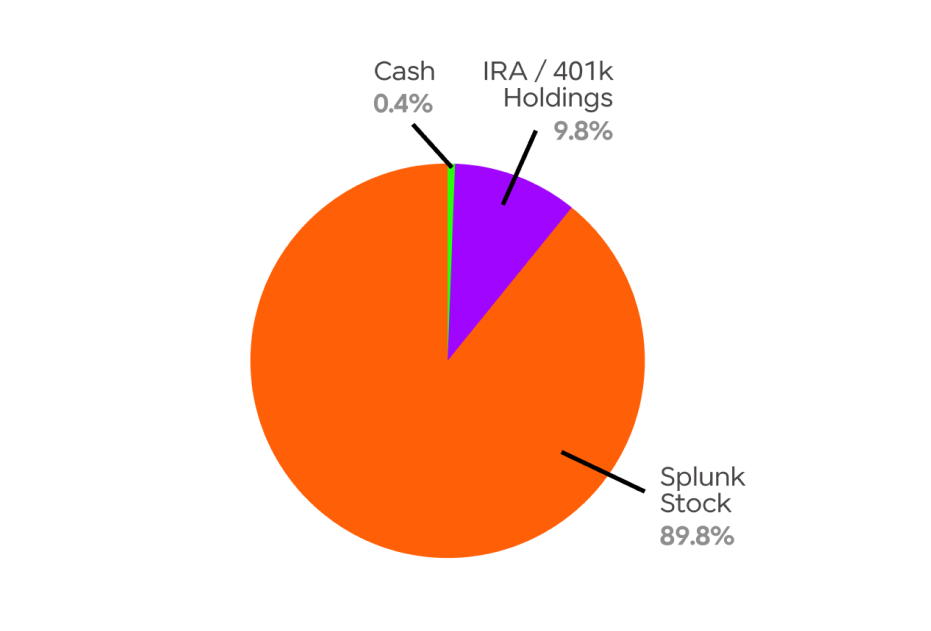
90% of my wealth was in a single stock. The equity from the IPO I’d been chasing for a decade. On paper, I looked like I was winning. In reality, I was carrying a portfolio built for one thing — accumulation — that couldn’t do the thing I actually needed.
Zero income. Nothing in the portfolio was designed to pay me. Every dollar was aimed at more growth.
97% concentrated in growth assets. A single earnings miss on that one stock could take out half my net worth and my paycheck in the same afternoon.
Maximum tax exposure. Everything I touched was hit at ordinary income rates or short-term cap gains.
I gave it a name later. The Problem Portfolio. I’ve now seen it in close to 200 members of the community — it’s the default architecture almost every wealth builder ends up with when the portfolio has never had a job.
Once I had the $175K number, the gap became impossible to ignore. The portfolio I had could never produce the number I needed. Not because I didn’t have enough wealth. Because the architecture was wrong.
The Three Moves
The $175K number produced three hard requirements. Not “consider these.” Requirements. Non-negotiable if I wanted the Legacy Statement to be real and not aspirational.
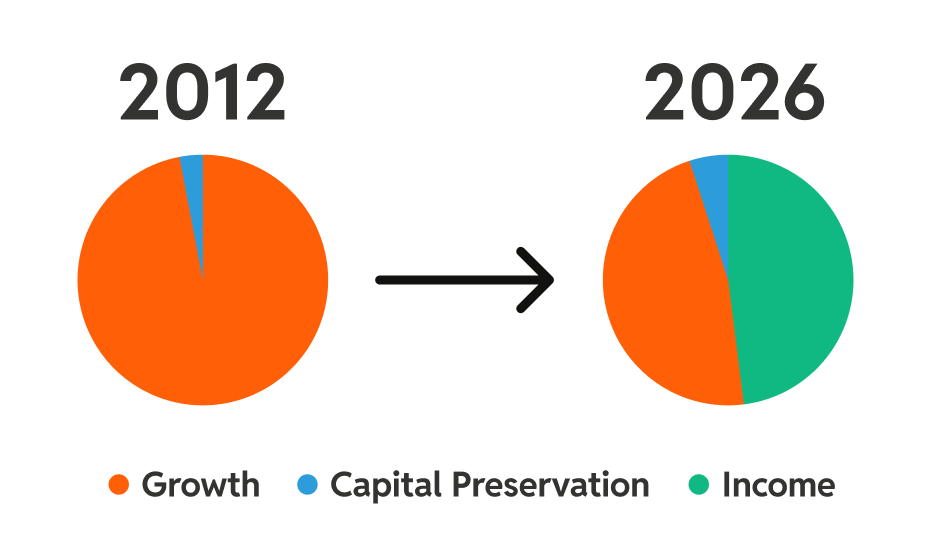
Move 1: Reallocate to income-generating assets. Roughly 48% of the portfolio had to become an income engine. Real estate. Private equity credit. Dividend equities. Structures designed to send cash flow, not just appreciate.
Move 2: Reduce concentration risk. The single-stock position had to come down aggressively. It didn’t matter how well the stock was performing. Concentration isn’t a bet; it’s a threat to the mission. I began systematic divestment and reallocation.
Move 3: Add capital preservation. Roughly 5% had to sit in preservation — cash, short-term treasuries — so that when I actually walked away, the transition wasn’t held hostage by market timing. A buffer that let me leave without stress.
Every one of those moves came out of the math. Not out of a book. Not out of an advisor’s pitch. Out of the number the Legacy Statement produced.
What The Portfolio Looks Like Today
Ten years later, here’s what the architecture actually built.
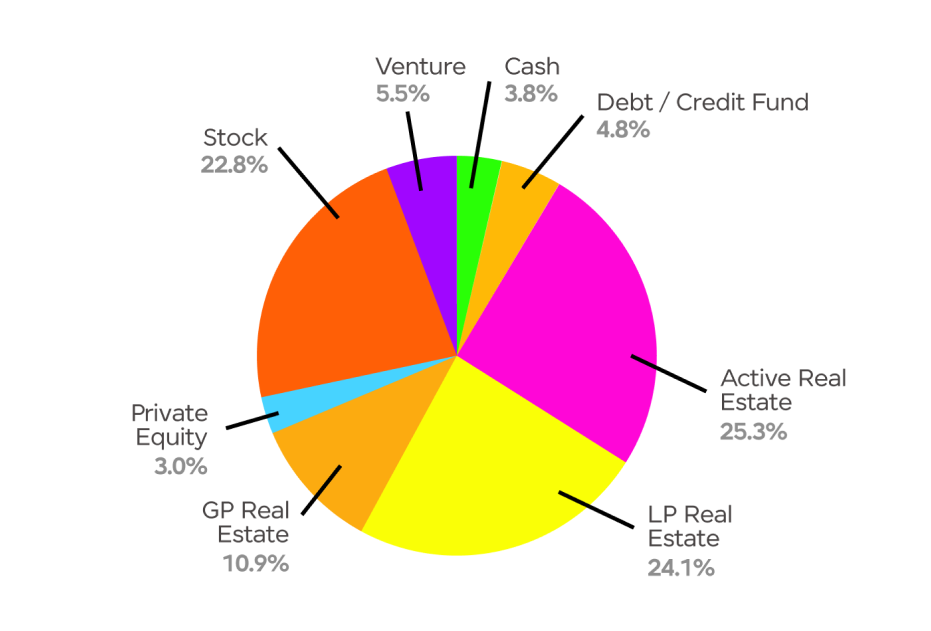
The portfolio is systematically diversified — real estate, private equity, covered call ETFs, dividend equities. It generates over $200,000 per year in income, well ahead of the original $175K target. And the effective tax rate on that income keeps dropping every year because the architecture was designed with tax treatment in mind from day one.
The income engine has four layers:
Private equity credit and business funds — around $60K/year. Higher yield (9–12%), lower liquidity. Paid quarterly.
Real estate — roughly $80K/year. This is the bulk of the engine, and the tax treatment matters here — much of it comes back as return of capital or depreciation, which means I’m not paying ordinary income rates on it.
Covered call ETFs — bridge income. High liquidity. Monthly distributions. 7–10% yield.
Dividend equities — around $20K/year. Lowest yield (3–4%) but maximum liquidity and qualified dividend treatment.
Different yields. Different tax treatments. Different liquidity profiles. One income engine designed to send cash to my family every month without touching principal.
I’m not showing you the specifics so you can copy them. Your architecture will look completely different depending on your Legacy Statement and the number it produces. I’m showing you so you can see it’s possible — that you can go from a Problem Portfolio to an income engine designed around the life you actually want.
But it starts with the number.
Your Number Is Different — And That’s the Point
Here’s what I want you to see. Every Legacy Statement produces a different number.
Mine produced $175K because I wanted to walk fully away from the corporate paycheck. A VP of Product I coached wanted a one-year sabbatical instead — his number was $100K. A Director of Product Marketing in his early 30s wasn’t trying to escape — he was trying to buy the freedom to turn down mediocre offers and wait for the perfect equity package. His number was $50K.
Same formula. Same discipline. Completely different outputs — because completely different Legacy Statements.
That’s the pattern. The Legacy Statement is universal; the number is personal. You do the same math I did. You get a different answer. Then you build a portfolio designed around your answer.
That’s how the sentence stops being words on a page and starts being the operating anchor of a real family office.
Your One Calculation This Weekend
Sit down for 30 minutes. Bring your Legacy Statement (or a rough draft if you don’t have one yet). Then work through the math honestly:
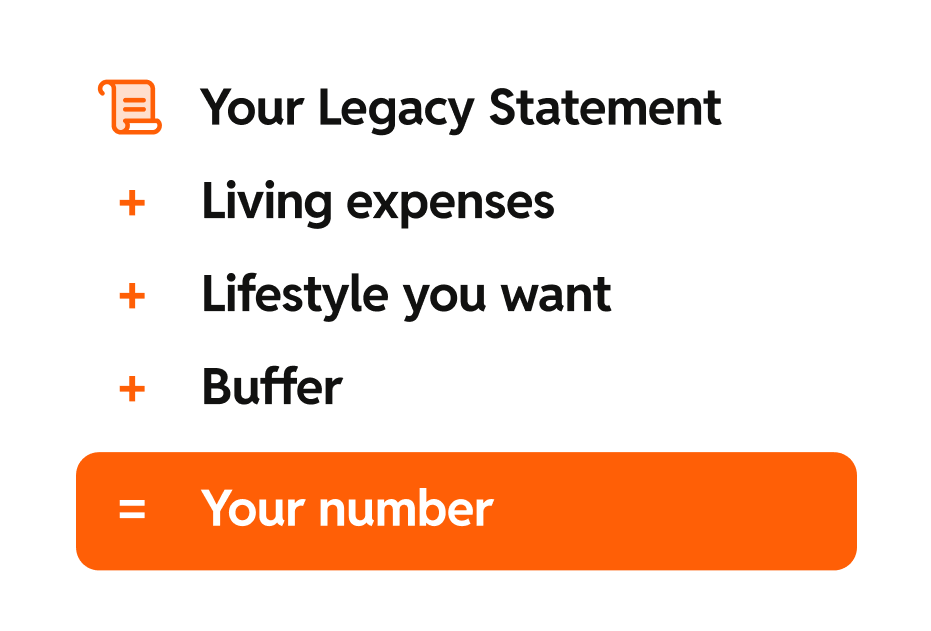
Living expenses. What does your family actually need to run for a year? Not aspirational. Actual.
Lifestyle you want. What does the version of life your Legacy Statement describes actually cost? Travel. Education. Family gatherings. The things the sentence is aimed at.
Buffer. What’s the number you need on top so that a bad market year doesn’t force a change to the lifestyle?
Add them up. That’s your number. The dollar figure your portfolio needs to produce every year in income for the Legacy Statement to be real.
Write it down. Same page as the Legacy Statement, right underneath the sentence. Because the sentence without the number is a wish. The sentence with the number is an operating requirement.
That’s the first move. From there, the portfolio work begins.
Held beats pretty.
Same principle as the last two weeks. The messy first-pass math you actually do beats the perfect calculation you never finish. Your first number won’t be exact. It’ll be close enough to start building the portfolio around. It’ll evolve as your Legacy Statement evolves. That’s the practice.
The Legacy Statement gives you the direction. The number gives you the requirement. The portfolio delivers on the requirement. That’s the whole chain.
Do the math this weekend. Everything downstream — the entities, the allocations, the tax architecture, the Expert Partner Team — sits on it.
Let’s keep building.
—Christopher
P.S. The math I did above is exactly the exercise inside The WealthOps Way — our free 2-hour live workshop. If reading this made you want to work through your number with some scaffolding, that’s the on-ramp. Two hours. Free. You leave with a V1 of your Legacy Statement and your first pass at the income requirement it produces.
👉 Start here: The WealthOps Way
Go Deeper
🎯 Start here if you’re new — The WealthOps Way Free, 2-hour live workshop. You’ll leave with a V1 Legacy Statement + the income math it produces + the foundation for a Micro Family Office.
The structured build path: Micro Family Office Accelerator — Year 1 of the WealthOps membership. Where close to 200 members are practicing this right now.
Recent arc:
My First Legacy Statement Was 11 Words — the sentence that became the anchor
The Habit Every Family Office CEO Holds. Most Don’t. — the Family Office meeting
I’m Training 170 People to Be Family Office CEOs — the community of practitioners
Today: the number the sentence produced
New here?
I’m Christopher. I built my Family Office after my 2012 IPO, wrote my first Legacy Statement in 2016, calculated the $175K income number that rewrote my portfolio, walked away from the workforce in 2022, and now lead a community of close to 200 practitioners at WealthOps. If this is your first issue — welcome. The best place to start is The WealthOps Way (wealthops.io/go). Free workshop, full framework, no pitch.
This is education, not advice. Learn the systems, don’t copy blindly.

Join me for The WealthOps Way—our free live workshop designed to help you stop guessing and start running your wealth like a business.
You’ll go from scattered to strategic as you craft your own Portfolio Thesis—the foundation of everything that follows.
Spots are limited—and the clarity you’ll gain? Game-changing.
Let’s build your portfolio like it’s your next great company!

If you like the newsletter, support us by letting us know what you think (one click); please do that now!
PS...If you're enjoying Managing Tech Millions, please consider referring this edition to a friend.
If this was useful, tap the ❤️ button. It tells Substack to show more writing like this.
And whenever you are ready, there three ways I can help you:
Follow me on LinkedIn: Get more insights and real-time updates.
Watch on YouTube: Dive deeper into wealth strategies and interviews.
Get in Touch: Ready for a bigger move? Let’s talk.

Disclaimer: This newsletter is for informational purposes only and does not constitute financial or career advice. Always consult with qualified professionals before making any decisions based on the information provided.