

👋 Managing Tech Millions 📈 your go-to source for building wealth with tech equity and managing the money that comes with it.
Every Thursday, we'll deliver a concise and powerful lesson on building wealth working for equity compensation or on managing your seven and eight-figure portfolio.


Today, in 5 minutes or less, you’ll learn:
📊 Why most high earners score low — and why it has nothing to do with capability
🎯 The gap in wealth education that nobody talks about
🗺️ The one thing that changes when you finally have the map

Hey Portfolio CEOs,
Last week I shared the MiFO Component Scorecard — a 0-4 maturity assessment across the 7 components every family office uses.
The responses came in.
(If you missed it, read the scorecard here)
The most common score? 4 to 10 out of 28.
And the most common reaction: “I didn’t even know half of these things existed.”
That’s not a problem. That’s the starting point.

Managing Tech Millions is a Weekly Podcast that gives you deep dive conversations into building and growing wealth with myself and other industry experts.
This week, I’m breaking down how the top 0.1% of investors actually structure their portfolios—and why it looks nothing like the traditional advice most people receive.
What the Ultra-Wealthy Own: Why real estate and private equity dominate their portfolios
Beyond Public Stocks: Why equities are only one piece of the wealth-building puzzle
How Family Offices Think: The structure used to protect, grow, and coordinate large portfolios
Vision, Structure, Strategy: The three foundational elements behind sophisticated wealth management
From Accumulation to Operation: How to start managing your wealth like a CEO, not just an investor

A Low Score Doesn’t Mean You’re Behind
Here’s what I want to be direct about:
Most people who took that scorecard — physicians, engineers, tech executives — scored low. Not because they’ve been careless with their wealth. Not because they lack discipline.
Because this system was never taught to them.
You spent years mastering your profession. That knowledge was organized, deliberate, structured. Someone designed the curriculum. Someone taught you the framework. You learned it, practiced it, and built expertise.
Wealth management at your level? No such curriculum exists.
You’ve been figuring it out on your own — one advisor conversation, one podcast episode, one Google search at a time.
That’s not a character flaw. That’s the gap in what’s available.
The Desert Nobody Maps
Here’s the pattern I see constantly. (I wrote about this in depth here if you want the full picture.)
Below $1M, there are plenty of resources. Index funds, robo-advisors, personal finance content. The education exists. DIY works.
Above $100M, Single Family Offices provide everything. Full-time teams. Multi-disciplinary infrastructure. Institutional-grade operations.
Between $1M and $30M? A desert.
Too wealthy for the simple tools. Too small for traditional family office infrastructure.
“You’re in a service desert. Too complex for retail financial services, too small for traditional family offices. The industry isn’t built to serve you — so you have to build your own infrastructure.”
Your advisor gives you the same 60/40 portfolio they give every client. They’re not equipped to serve your level of complexity. And the traditional family office world requires $100M minimum just to get in the door.
So you end up with a collection of advisors who don’t coordinate. Investments without architecture. Entities without strategy. Decisions made reactively instead of systematically.
And when you take a scorecard like last week’s, you score 4 to 10 out of 28 — not because you’ve failed, but because you’ve been navigating without a map.
What Changes When You Have the Map
In 2012, I had a tech IPO that generated $3–4M.
By every external measure, I was successful. I hired advisors. I invested. I tried to build something intentional.
But I had no architecture. No coordinated system. No framework for what I was building.
Then a friend — someone who spent his career running Single Family Offices — sat down with me and explained the 7 components. He walked me through what every family office uses to operate at any portfolio size.
That conversation didn’t give me all 7 components overnight.
It gave me the map.
I finally knew what I was building. I knew what was missing. I knew the sequence.
The confusion didn’t disappear because I suddenly had infrastructure. It disappeared because I understood the system for the first time.
That’s the transformation — not from low score to high score in a week. From no map to having a map.
The System Already Exists
Here’s what most people in your position don’t know:
The 7-component framework isn’t something I invented. It’s what I found when I studied how every successful family office — from $10M to $10B — actually operates.
They all use the same architecture:
Foundation: Vision → Structure
Operations: Protection → Process → Data
Leverage: People → Governance
The difference between a $10M Micro Family Office and a $500M Single Family Office isn’t the components. It’s the scale of execution.
Same principles. Scaled execution.
“You already possess the operational skills. You’re applying them to a new domain.”
If you’ve run engineering teams, managed complex projects, or built a medical practice — you know how to operate a system. The MiFO is a system. The framework is learnable.
The only thing missing was the curriculum.
Where the Education Lives
The reason most people in the $1M–$30M range have never heard of this framework is straightforward:
It has never been taught at this wealth level.
Family offices have known this system for decades. But the education — practical, implementation-level, designed for portfolios under $100M — hasn’t existed.
Until now.
Everything in this newsletter over the past 10 weeks — the service desert, the Portfolio CEO identity, the 7 components, the scorecard — is the framework.
The implementation is what lives inside the WealthOps Accelerator and what we teach at the WealthOps Way workshop.
If last week’s scorecard felt foreign — if the components sounded like a foreign language — you’re exactly who this is built for.
Not people who have it all figured out. People who are ready to build with a real map in hand.
Key Takeaways
A low score is expected — this system isn’t taught at your wealth level. It’s a starting point, not a verdict.
The service desert is real — the gap between $1M and $30M is where the education has always been missing.
The map changes everything — understanding the 7-component framework is the shift. Not perfecting it overnight. Knowing what you’re building.
Your Action This Week
If last week’s scorecard made you realize how much you don’t know about running your wealth as a system — that’s the signal.
The WealthOps Way workshop is where the framework comes to life. Two hours. Live. Free.
You’ll leave with a clear picture of where you are, what’s missing, and exactly what to build next.
Register for the WealthOps Way →
That’s the shift from navigating without a map to building with one.
Let’s keep building.
—Christopher
P.S. The most common thing I hear after the workshop: “Why didn’t anyone teach me this sooner?” The framework isn’t complicated. It’s been around for decades inside family offices. It just hasn’t been available at your wealth level — until now.
Go Deeper
Start with the workshop: The WealthOps Way — live, free, 2 hours. The framework comes to life.
Subscribe: Weekly frameworks, systems, and practitioner insights → Managing Tech Millions
This is education, not advice. Learn the systems, don’t copy blindly.

Join me for The WealthOps Way—our free live masterclass designed to help you stop guessing and start running your wealth like a business.
You’ll go from scattered to strategic as you craft your own Portfolio Thesis—the foundation of everything that follows.
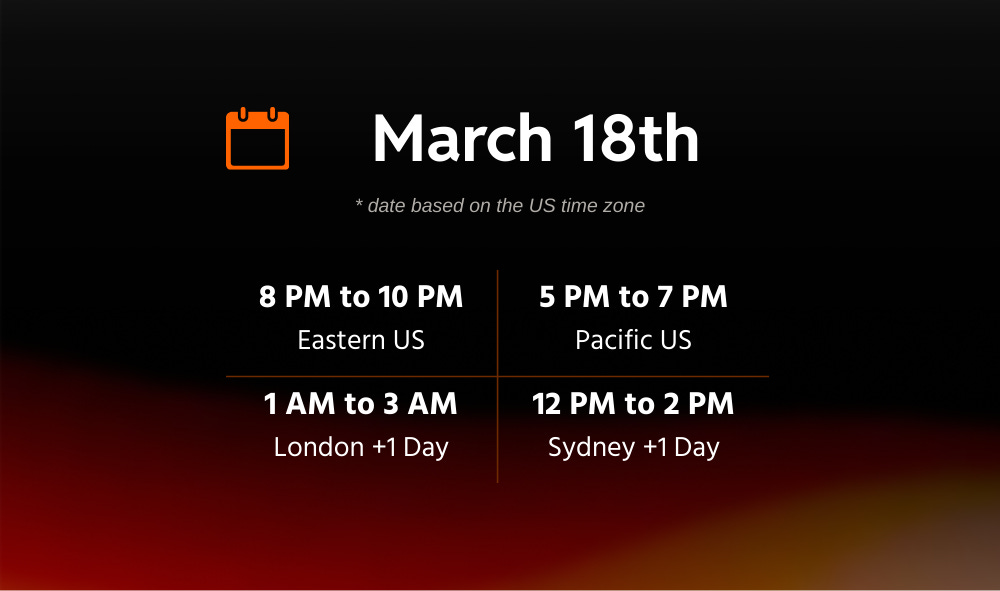
Spots are limited—and the clarity you’ll gain? Game-changing.
Let’s build your portfolio like it’s your next great company!

If you like the newsletter, support us by letting us know what you think (one click); please do that now!
PS...If you're enjoying Managing Tech Millions, please consider referring this edition to a friend.
And whenever you are ready, there three ways I can help you:
Follow me on LinkedIn: Get more insights and real-time updates.
Tune into the Podcast: Dive deeper into wealth strategies and interviews.
Get in Touch: Ready for a bigger move? Let’s talk.

Disclaimer: This newsletter is for informational purposes only and does not constitute financial or career advice. Always consult with qualified professionals before making any decisions based on the information provided.