


👋 Managing Tech Millions by WealthOps 📈 your go-to source for building wealth with tech equity and managing the money that comes with it.
Every week, we'll deliver a concise and powerful lesson on building wealth working for equity compensation or on managing your seven and eight-figure portfolio.


Today, in 5 minutes or less, you’ll learn:
📊 Why April is the wrong month to think about your taxes, and what October is actually for
🎯 The three-step system I run every fall: Gather, Decide, Execute
🗺️ The one thing to finish this weekend so your December is calm instead of frantic

Hey Family Office CEOs,
The angriest I’ve ever been about money was over tax checks.
After my first multi-million dollar payday, I wrote some really, really big checks to the government. I was angry. I was in denial. I was sad. I went through every stage of it.
Then I did what a lot of first-generation wealth builders do. I went on a mission, one I now realize was at least a little emotionally driven, to never feel that way again.
Eventually I figured out what actually made me so angry. I was finding out what I owed in April, after every decision that could have changed it was already behind me. There’s a better way to run it.

Managing Tech Millions is a Weekly Podcast that gives you deep dive conversations into building and growing wealth with myself and other industry experts.
This week, I’m breaking down why the family office model is no longer reserved for families worth $100 million—and how to bring the same operating discipline to your scale.
A System Centuries in the Making: From sixth-century majordomos to the Rockefeller family office, wealthy families have long used dedicated systems to grow, protect, and transfer their wealth.
The Financial Services Desert: Traditional advice stops being enough around $1 million, but a single-family office rarely makes economic sense below $100 million. A Micro Family Office fills the gap between them.
Why This Matters Now: A historic wealth transfer and the rapid growth of first-generation millionaires are creating millions of people with complex wealth—but no operating system for managing it.
The Four-Phase Framework: Architect, Build, Run, and Succession turn scattered financial decisions into a disciplined wealth business designed to outlast its founder.
Fractional Team, Institutional Discipline: Instead of hiring full-time staff, you coordinate specialized tax, legal, accounting, and investment professionals around one strategy.
Who This Is Built For: If you’ve experienced a liquidity event, built a complex portfolio, or outgrown generic financial advice, this structure gives you a path from Wealth Creator to Family Office CEO.

April Is Compliance. Q4 Is Strategy.
Growing up, I saw the same routine every year, and maybe you did too.
Sometime in April, you start gathering your tax documents. You hand them to someone. They tell you what you owe. You write the check.
What I didn’t understand until later is that all of that is compliance. You’re getting your paperwork in order so you can report where you landed. It matters, but by April there are no moves left to make. You’re only finding out.
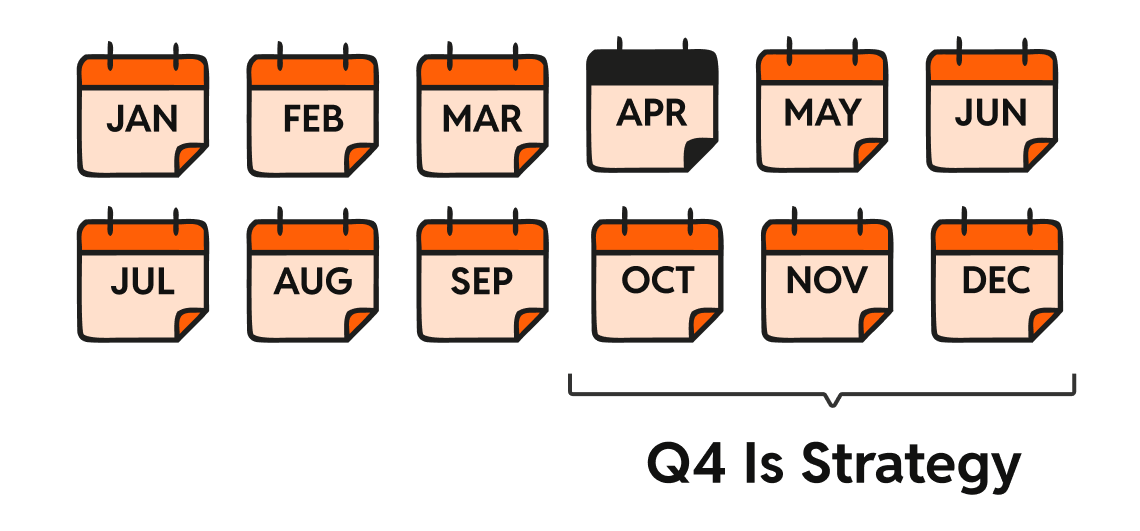
The opportunity is in the fourth quarter. Right now, in October, you still have three months of decisions in front of you. You know roughly where your income came from this year and what kind of income it is, and you can still change where the year lands.
A family office CEO decides where the plane lands.
Step 1: Gather (the first week of October)
You can’t decide anything until you know where you stand. So the first job is to pull it all together.

Close your books through September. Now you have three quarters of real numbers, not guesses.
Look at where your income came from, and what kind it is. Portfolio income with capital gains, ordinary income, and passive income are each taxed differently, and each opens up different moves. A year heavy on ordinary income calls for a different plan than a year of mostly portfolio gains.
Check your run rate and what you’ve paid. What are you spending each month? Have you paid any income tax this year? Are there estimated payments you should be making to avoid penalties? Do you need to set cash aside for a tax payment coming next year?
Look at your giving. What have you given so far, and what’s already committed?
Review what you’ve already put in place. Are your structures doing their job? While you’re at it, take a quick pass over your entity documents, trust documents, and insurance declarations pages.
Book your tax planner now. The sooner that meeting is on the calendar, the more moves you’ll still have when you sit down.
Step 2: Decide (mid-October into November)
Now you take what you gathered and decide what, if anything, to do.
Start with a baseline: do I need to do anything at all? If your plan has been working and you’re landing where you intended, the answer might be “not much,” and that’s a perfectly good outcome.

If there are moves to make, these come up again and again, in my own planning and in our member community:
Harvesting losses. Are there positions sitting at a loss that could offset gains you’ve already taken this year?
A Roth conversion. Is this a lower-income year, where converting some traditional retirement money costs less in tax than it would later?
Bunching your giving. If you sold a lot of stock this year, you might give what you’d normally give over three years all at once, in appreciated stock, which also avoids the capital gains.
Family gifts and 529s. The annual gift allowance is $19,000 per person, and it resets every January. If you don’t use it, it’s gone.
Maxing retirement contributions before the year closes.
I think of your tax balance sheet as having two kinds of negative tax assets. Depreciation can offset passive income, and capital losses can offset capital gains. Build them deliberately, and whatever you don’t use carries forward into future years until it’s used up.
That’s what I eventually did with all that anger. I went looking for income that was tax-efficient, around an 8% cash-on-cash return that I didn’t have to hand most of back. I went slowly. Deploying my first $500,000 took almost five years, $50,000 at a time. Today I carry forward depreciation that offsets the passive income from other parts of my portfolio.
One warning, though. Every fourth quarter, someone will pitch you an investment whose main selling point is the tax break. Don’t make an investment out of fear or speed. If you wouldn’t buy it in March, don’t buy it in December. Stick to things you know, like, and understand.
Step 3: Execute (late October through December)
The last step is putting your decisions on the calendar, early.
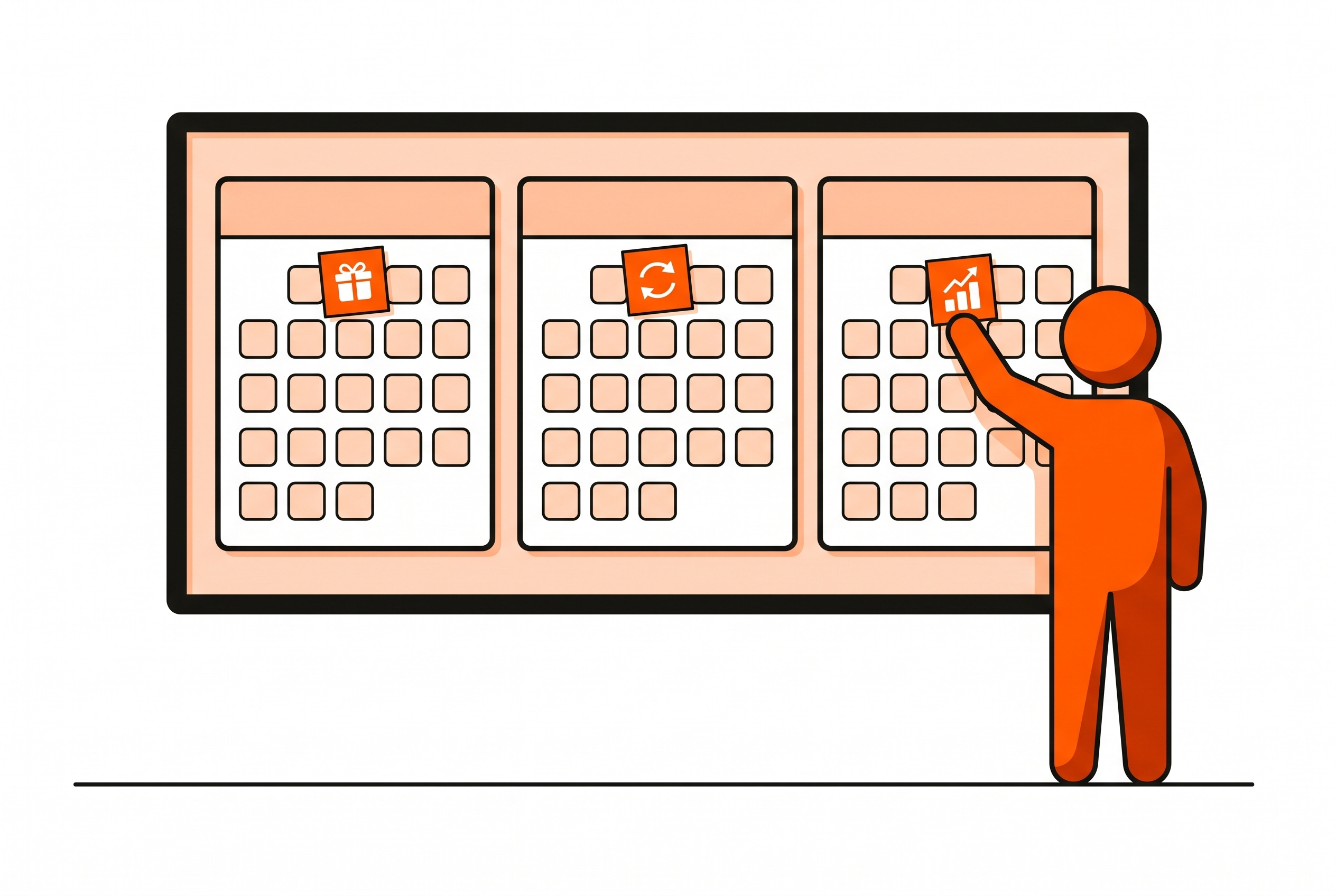
Fund your donor-advised fund early. I have been that guy writing checks on December 29th. I remember thinking, this is stupid, I’m not doing this again. And I haven’t.
Move appreciated stock sooner rather than later. If you’re giving stock, decide which lots you’re giving and make the transfer while you can still watch the market and pick your moment.
Bring in help for anything complex, in November. A Roth conversion is not a December 28th decision. If it needs oversight, get it early.
Make your final moves in late December. For me, that means looking at where income is landing inside my management company and making any last contributions.
By January 15th, I know exactly where the plane landed, and April is just paperwork.
Doing it this way also makes the last two weeks of the year better. When all of this is checked off before the holidays, you actually get to enjoy them.
Key Takeaways
April is compliance. Q4 is strategy. By April you’re reporting where you landed. In October you can still decide where you land.
Gather, Decide, Execute. Pull your numbers in early October, choose your moves by November, finish them before the holidays, and know where you landed by January 15th.
Build your negative tax assets on purpose, and never in a hurry. Depreciation and capital losses can work for you for years. A tax break on its own is never a reason to make an investment.
Your Move This Weekend
Finish the Gather step, all of it, this weekend.
Close your books through September, or get them closed, so you’re working from real numbers.
Sort your income by type. On one page, write how much was portfolio income, how much ordinary income, and how much passive.
List your giving: what you’ve given so far, and what you’ve committed.
Check what you’ve paid in taxes this year, and whether any estimated payments are due.
Then book the meeting with your tax planner.
Completion signal: the meeting is on the calendar.
Held beats pretty.
I spent a long time being angry about taxes. What finally changed it was a calendar.
Let’s keep building.
—Christopher
P.S. Running your year-end like a business, from the books to the cadence to knowing which moves matter for your situation, is a big part of what members work through together inside the Micro Family Office Accelerator. We’re running this exact Gather, Decide, Execute process together on our calls right now. If you want to see how it all fits, The WealthOps Way is the place to start.
👉 Start here: The WealthOps Way
Go Deeper
🎯 Start here if you’re new — The WealthOps Way Free, 2-hour live workshop.
The structured build path: Micro Family Office Accelerator — Year 1 of the WealthOps membership.
Recent arc:
The Year-One Mistakes I Watch Every Family Office Make — delegation, accounts, and the income ramp (confirm slug)
How Much I’m Telling My Kids About Our Money — the 5-level ladder (confirm slug)
Why I Start My Q4 in September — the four-area annual review
Today: the Q4 tax system I run every fall
New here?
I’m Christopher. I built my Family Office after my 2012 IPO — after googling “how to build a family office” and hitting the $100M wall the industry has quietly agreed on. Now I lead a community of more than 230 practitioners at WealthOps, and we’re building Eterna, the AI platform behind our approach. If this is your first issue — welcome. The best place to start is The WealthOps Way (wealthops.io/go). Free workshop, full rulebook, no pitch.
This is education, not tax or investment advice. Every situation is different, so work through your specific moves with your tax planner.

Join me for The WealthOps Way—our free live workshop designed to help you stop guessing and start running your wealth like a business.
You’ll go from scattered to strategic as you craft your own Portfolio Thesis—the foundation of everything that follows.
Spots are limited—and the clarity you’ll gain? Game-changing.
Let’s build your portfolio like it’s your next great company!

If you like the newsletter, support us by letting us know what you think (one click); please do that now!
PS...If you're enjoying Managing Tech Millions, please consider referring this edition to a friend.
If this was useful, tap the ❤️ button. It tells Substack to show more writing like this.

And whenever you are ready, there three ways I can help you:
Follow me on LinkedIn: Get more insights and real-time updates.
Watch on YouTube: Dive deeper into wealth strategies and interviews.
Get in Touch: Ready for a bigger move? Let’s talk.

Disclaimer: This newsletter is for informational purposes only and does not constitute financial or career advice. Always consult with qualified professionals before making any decisions based on the information provided.